Back

Investor Spotlight

Investor Spotlight

Andrew Boatright

Andrew Boatright became the General Manager for the Zeeland Board of Public Works in January 2019. Previously, he served as the Deputy Director for the City of Independence (Missouri) Power & Light (2016-2018) and the Electric Utility Manager for the City of Westerville (Ohio) Electric Division (1996-2016). He has also held positions at Public Power utilities Richmond (Indiana) Power & Light and the City of Rensselaer (Indiana).
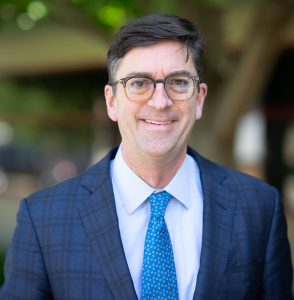
 

head shot of Andrew Boatright outdoors with a blue suite
Andrew Boatright

Andrew has also served in leadership roles on various American Public Power Association boards and committees (publicpower.org). He is a licensed Professional Engineer and a graduate of Purdue University with a Bachelor of Science in Electrical Engineering Technology and holds a master’s degree in business administration from Otterbein University.


He and his wife Eileen of 40 years have three adult children – all three residing in New York. They have one child living at home – Oliver, age 13, an untrained brown Labrador Retriever.


What led you down your professional path and what about your work is most meaningful or fascinating to you?

In my childhood in a small town in Indiana, I was enamored by my oldest brother, 14 years my senior, who had a penchant for creating electronic networks and devices to control audio equipment including radios, televisions, and high-fidelity equipment.  He had an inventory full of vacuum tubes neatly arranged in his closet, which friends and neighbors would occasionally come to our house to access for replacements for their broken devices. My brother attended Purdue University and graduated from the Electrical Engineering program there. My father and mother both graduated from Purdue. I was brainwashed.


Early on in my post-secondary education, I became uncertain about my career path and took time off from college. I began working as an Engineering Technician at an investor-owned electric utility in south-central Indiana. This is what ultimately charted my course for a career in the electric utility industry. I returned to college and worked at this utility before and after graduation. Not long after becoming fully employed at this same investor-owned utility, I decided to change career paths with a move to a small community in Northwest Indiana to work for a municipally owned electric utility. I soon realized that what drove my passion and inspiration in pursuit of a career path was the opportunity to be of service to the community where I work AND live. This was in 1983, and I’ve been employed in the municipally owned utility business ever since. The municipally owned utility is the best business model for the provision of essential services of electricity and water where the value proposition is SERVICE.


What about your work has you most excited right now?

The utility sector was once a very reactive industry but is now quite the opposite, embracing technology for use in detecting service disruptions and changes – well before the customer can pick up the phone to let us know. We are now providing ways for our customers to interact with us, whether it’s how and when they make payments for utility services, or in their ability to access detailed near-real time information about their energy and water usage. Don’t get me wrong, we still always want to hear from our customers. The electric and water industry is rapidly changing and we, like all service-oriented businesses, need to be responsive to and closely tracking with the ever-evolving customer experience.


What have you learned in your leadership role and what advice would you give to others in a new leadership role?

I really appreciate the generosity of the individuals who have helped me learn and grow. Early in my career, I received mentoring from numerous people who, as I look back on it now, likely took succession planning very seriously. They never said so, but it was understood this industry wasn’t always seen as glamorous. I experienced the greatest growth and maturity throughout my career when I ventured outside of my comfort zone.


I’ve also learned that leadership is not reserved only for those in executive leadership positions. Leadership comes in many forms and can be practiced at all levels of an organization. This is a function of an organization’s culture – which IS highly influenced by the organization’s executive leadership. Organizations that empower employees—who have presumably been hired as subject matter experts—to lead and execute can achieve results with seemingly fewer resources. Furthermore, leaders develop through this system, which creates a pipeline for succession.


Who are the people who have had a profound influence on you and your leadership style?

I’ve never intentionally designated a single person as a mentor, but I have self-selected various leaders throughout my career whom I have observed from afar or worked alongside throughout my career and have taken notes. These leaders may be musicians, athletes, clergy, actors, business associates, co-workers, family, friends, etc.  Many of them were excellent and some not so excellent leaders. I learned from their successes and failures as I observed them.


There is great value in continuous leadership development, no matter where you are in your career. In recent months, I’ve been blessed, as have the other members of our leadership team, with the good fortune of participating in Lead 24/7 leadership development. As a Lead 24/7 alum, I am continuing monthly executive coaching and alumni group meetings. As I approach the conclusion of my traditional work-life, I only wish I had established my leadership development plan earlier on in my career. Regardless, it’s never too late to improve one’s leadership skills.


Talk to us about workplace culture. What are some values that you and your team live by? 

In 2022, our Leadership Team and Board of Commissioners updated our Strategic Plan, including developing our Core Values. It was important that we not only identify the “words” that define our organizational values, but also the behaviors behind those words. Our Core Values are: Safety, Family-Oriented Workplace Culture, Integrity, Continuous Improvement, and Service and Stewardship. These words alone leave much room for interpretation. But the behavior statements behind them describe what the words mean to us. I encourage readers to look at our Strategic Plan document which can be found on our website and observe the behavior statements listed under each Core Value. We have an amazingly talented and hard-working team who are all true leaders who exemplify the essence of our workplace culture.


What is a book that you’ve read or an influencer that you’ve listened to recently that has made you a better leader? 

The one book that has become the basis for a career objective of mine is The Five Dysfunctions of a Team: A Leadership Fable by Patrick M. Lencioni. The concepts seem so simple, and it’s relatively easy to identify where team dysfunction exists. Yet overcoming dysfunction requires tremendous energy and discipline on everyone’s part. I have become a better leader through understanding my own shortcomings and how I may be impeding our ability to achieve high performance as a team. There are times when it feels as though we’ve mastered teamwork and other times where our shortcomings reveal we’re not quite there yet. It’s much like exercise: you must remain disciplined in training yourself to function the way you want to. It’s a struggle, but one well worth the effort!


Can you share why it is a priority for you to invest in economic development?  

As the electricity and water provider to homes and businesses in and around Zeeland, we take very seriously our role as a partner and facilitator in helping to make everyone else wildly successful. This comes in many forms: low, not-for-profit rates; clean and reliable services; local stakeholder input; and local governance, to name a few.  We also recognize the need to support the community by being active in organizations such as Lakeshore Advantage and the West Coast Chamber.  Support in other ways such as our Community Grant Program and Holiday Power Dollars demonstrates our desire to create win-win scenarios for everyone in our community.  Support also comes in the form of recognizing our community’s diversity by eliminating language barriers and exemplifying equity and inclusion throughout the community we serve. Quoting our Strategic Plan, “Our best means of doing this is through a strong emphasis on exploration, collaboration, and where appropriate, leveraging our resources to improve the community’s quality of life. Our success is directly attributable to the community’s success, and we are committed to supporting all our stakeholders with the provision of essential utility services that are reliable, safe, and cost-competitive.”
Back

Investor Spotlight

Investor Spotlight

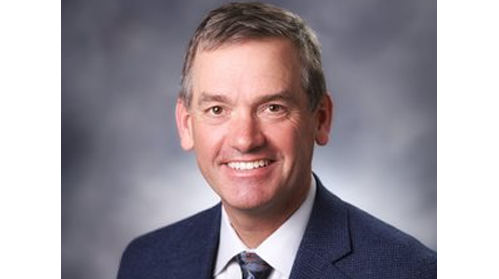
Bill Hoefer

Bill Hoefer, Market Leader for Corewell Health Pennock and Zeeland Hospitals, is a healthcare executive with over 28 years of experience leading a handful of hospitals across the country. Bill’s “true north” is working with his teams to ensure exceptionally high quality and safe care for the communities they serve, striving to ensure each member of the team—from receptionist to physician—is valued and appreciated. He also finds ways to be involved in efforts to support the community.


Over the years, Bill has led teams in mid- and large-sized community hospitals, independent hospitals, teams within large systems, and has had responsibility for the development of oncology and neuroscience service lines across large geographic areas. Bill and his wife Melissa will celebrate 25 years of marriage later this year and are parents to three high school and college-age children.


What led you down your professional path—from childhood interests to choices in educational focus and beginning your career? What were the key turning points for you?


As a child I would occasionally go to the hospital with my dad as he did rounds. Early on I was able to walk behind closed doors into radiology departments, surgery centers and physician lounges. As a child my world view was all kids grow up to work in hospitals! My dad was a physician and both my mom and step-mom were nurses. When I went to college, my vision was to follow in my dad‘s footsteps as a physician. I quickly realized I did not have an aptitude for success in organic chemistry or molecular biology, but I thrived in classes related to people, communication, and leadership.


In college I was introduced to a gentleman who ultimately influenced my career path. When he asked me “what would you like to do when you grow up?” I didn’t know that the answer would be what I am doing today. At the end of the conversation, he handed me a business card and said, “Bill, if you ever want to run a hospital, I’d like you to call me.” I later learned he was the Director of the Healthcare Administration program at Washington University School of Medicine in St. Louis. I took that fork in the road and never looked back.


What have you learned in your leadership role and what advice would you give to others in a new leadership role?


Working in healthcare leadership for 28 years, I have learned many lessons. Some of those lessons came with hard knocks, many came through work experiences, and others came through the generosity and wisdom of mentors. The most important piece of advice I would give to someone in a new leadership role is to invest substantial time in getting to know your team and the community. I learned when things are challenging, it is almost always team members at all levels, with deep organizational knowledge of systems, culture, people, and the community who bring stability to solve the problem. Our people are our number one, two, and three most valuable assets. We need to know them, appreciate them, and care for them.


The second bit of advice I would offer is to be as present and as engaging as possible at all levels of the organization. The faster a new leader can develop deep relationships throughout the organization, the more quickly that team will achieve seemingly insurmountable goals and bring its mission to life.


The final bit of advice I would offer is to lead authentically and with humility. Most successes an organization achieves will be the result of the team’s collective contributions. Teams are more likely to rally behind a leader who truly values the contributions of individual employees, acknowledges the person on the front line has the magic sauce that makes success happen, and acknowledges that the leader is just a small part of what makes wonderful things possible.


Talk to us about company culture. What are some values that you and your team live by? 


Our values are expressing compassion, being collaborative, striving to create clarity, having curiosity, the courage to try new things, and have difficult conversations. The value that stands out the most to me involves collaboration. A big part of my role as a leader is to celebrate the team’s successes and highlight each of their many contributions. As a team, we are laser focused on providing exceptional care to our community. We know that care is delivered by the teams on our front lines. Our goal as a leadership team is to ensure those frontline team members know how important their contributions are, and how grateful we are as an organization for the time, energy, and knowledge they put into providing exceptional care.


What is a book that you have read or an influencer that you’ve listened to recently that has made you a better leader?


If you were to ask me, “Bill, what is the biggest difference in your life in the most recent three years prior to the past 30?” I would share I have become a voracious reader. Another bit of advice I would give to all leaders is to read a lot. Read about things you don’t know much about. Read about concepts you don’t agree with. Learn about history and especially those things that have negatively impacted our country, our society, and the individuals who make up our great nation. When you hear someone talk about a book and your first instinct is to say, “I do not agree with that,” read the book.


I recently read “Grant,” by Ron Chernow. This book reminds me of the great struggles our country has been through while trying to provide equal opportunity and equality to all. This book illustrated to me that we have taken great steps forward as a nation, but progress has often been followed by regression. It also reminded me when we come together as individuals to form a team, the individual contributors do not have the same foundation because the playing field we call life is not level. Inequity exists in terms of access to education, mentors, food, shelter, and access to activities that build knowledge and character. The inequity impacts our individual ability to overcome obstacles and thrive.


As leaders we need to be part of the effort to create opportunity for every person on our team so that, as teams, we can live to our fullest potential.


Can you share why it is a priority for you to invest in economic development?


Economic development strengthens the vibrancy of the communities that we live in and serve. Through economic development, we can attract more sophisticated businesses to our communities, which create jobs and support the financial stability for our families and neighbors.


Economic vibrancy for our community affords greater investment in education and activities for our children and ourselves. Without economic development it is more likely that we have an under-employed population, that we will not have the financial depth to maintain our community’s infrastructure, and that we will have social challenges that negatively affect individuals in our community.


Communities that are strong economically and have thriving and growing businesses are far less likely to have unemployment, crime, homelessness, poor health, and other challenges that drain our communities’ financial reserves. As an organization, we support economic development activities on the lakeshore and our hope is this is the “norm” for all individuals and organizations who call Ottawa and Allegan counties “home”.

Back

News

Lakeshore Advantage Hosts Expert Panelists To Discuss The Return On Investment For Implementing Smart Manufacturing Technologies

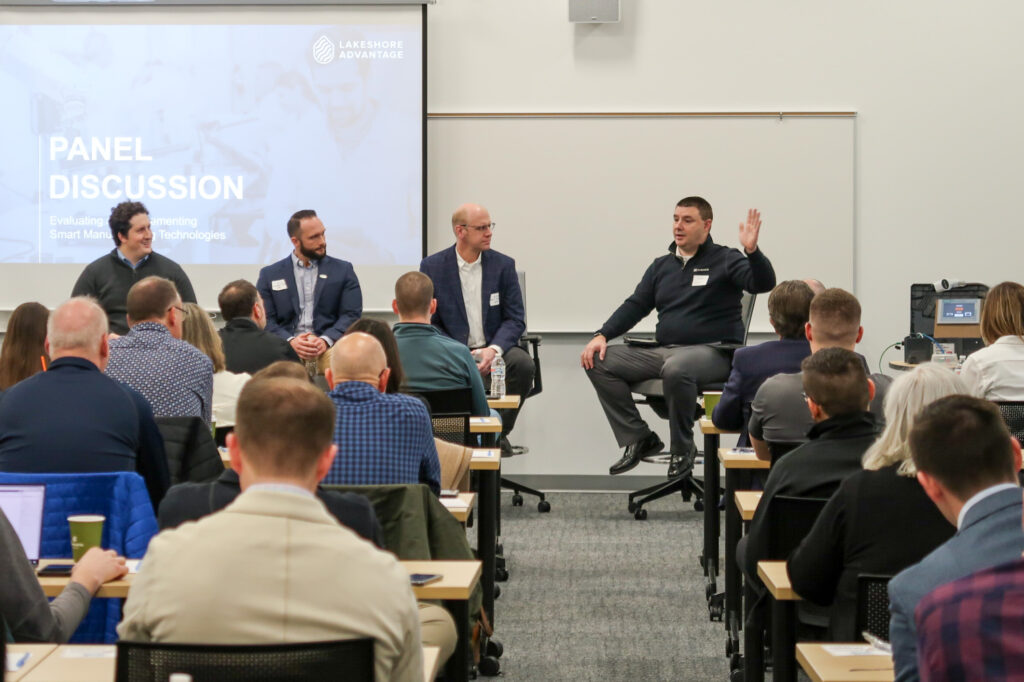
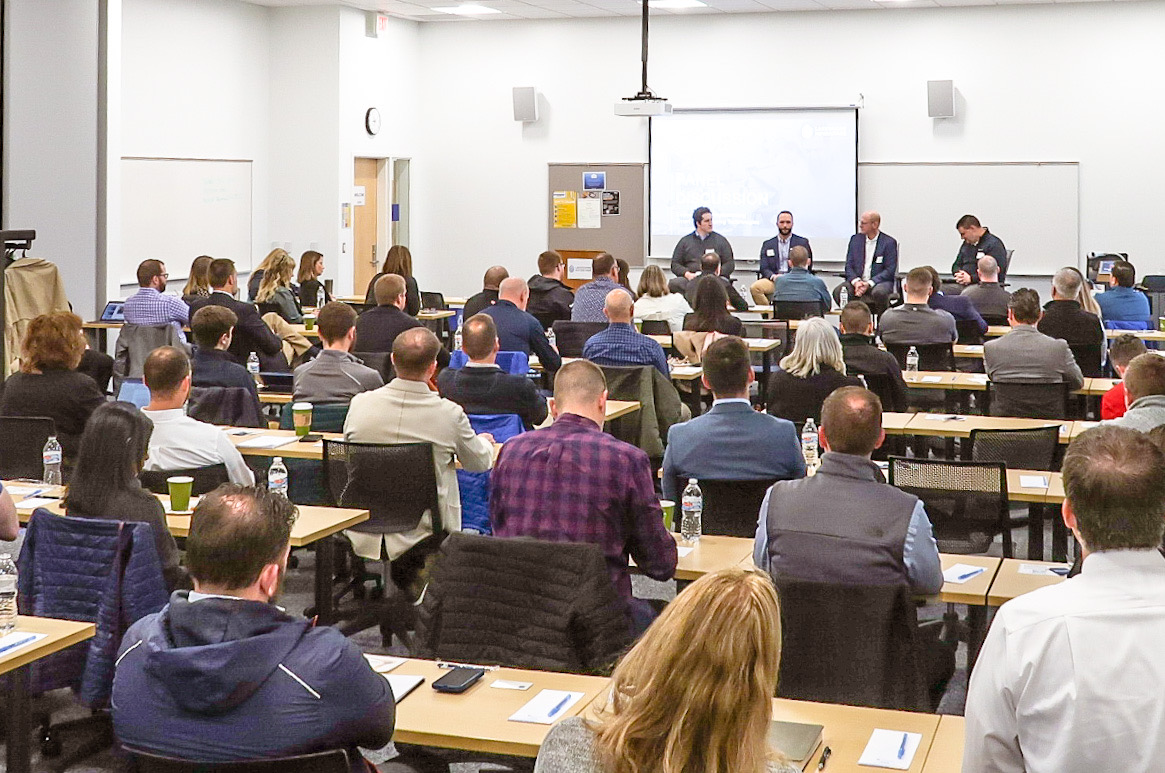
HOLLAND, Mich. (March 23, 2023)—Today, Lakeshore Advantage, the economic development organization serving Ottawa and Allegan counties, hosted an event as part of the organization’s Talent Learning Series featuring expert panelists from the automation sector. Nearly sixty leaders from the region’s manufacturing, technology, automation, and education among other sectors, were in attendance.


The panel was held as part of a broader series of events. The Lakeshore Advantage Talent Learning Series addresses what continues to be a significant barrier to growth for manufacturers in West Michigan’s lakeshore region—talent attraction. Experts discussed the hidden returns, and costs, that manufacturing leaders should consider when implementing new smart manufacturing technologies.


Erik Davis (Automation Alley), Brandon Couture (Koops Automation Systems), Marc Smeyers (GHSP), Shawn O’Farrell (DISHER)


“There were many light bulb moments during today’s discussion,” said Jennifer Owens, President of Lakeshore Advantage. “What was evident to me, is that any perceived resistance to automation is not about the fear of technology, it’s about the fear of change. We need to equip our leaders with the skills to bring their team along on the journey.”


Discussion centered on ways for manufacturers to evaluate their operations and decide which elements are suited for automation or smart technology to help them run lean. Panelists also discussed the impact of adopting new technologies on workplace culture.


Panelists included:

  • Marc Smeyers, Chief Technology Officer at GHSP, a leading global supplier of mechanical and electromechanical systems to the automotive, transportation, and appliance industry
  • Eric Davis, Governance Lead and Analyst at Automation Alley, home to the World Economic Forum’s US Centre for Advanced Manufacturing
  • Brandon Couture, Sales and Marketing Manager at Koops Automation Systems, an automated solutions provider to the automotive, aerospace, energy, construction, consumer goods, and life science industries


The panel was moderated by Shawn O’Farrell, Area Lead of Manufacturing Technical Services and Automation at DISHER.


“Custom automation can go into environments that people can’t or don’t want to go into” said Brandon Couture of Koops Automation Systems.


The Michigan Economic Development Corporation (MEDC) is promoting smart manufacturing technologies through investments and grants to regional economic developers and organizations that support Michigan manufacturers, such as Michigan Manufacturing Technology Center-West and Automation Alley. Both organizations offer resources to help Michigan businesses adopt advanced technologies. MEDC’s Industry 4.0 Technology Implementation Grant can provide 50% reimbursement for qualifying smart manufacturing technology costs up to $25,000.


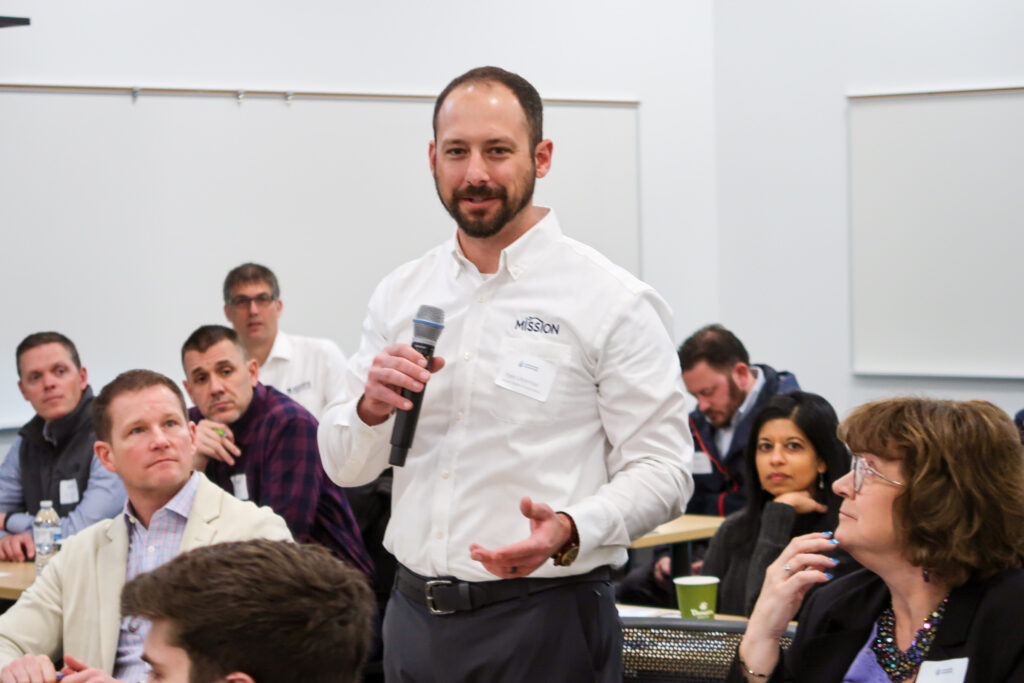
Ryan Lillibridge (Mission Design and Automation)


The Talent Learning Series is an event series for Lakeshore Advantage investors. To learn more about becoming an investor visit lakeshoreadvantage.com/our-investors or contact Beth.Blanton@lakeshoreadvantage.com.

Back

News

Liberty Plastics Expands Holland Charter Township Headquarters, Creating Ten New Jobs

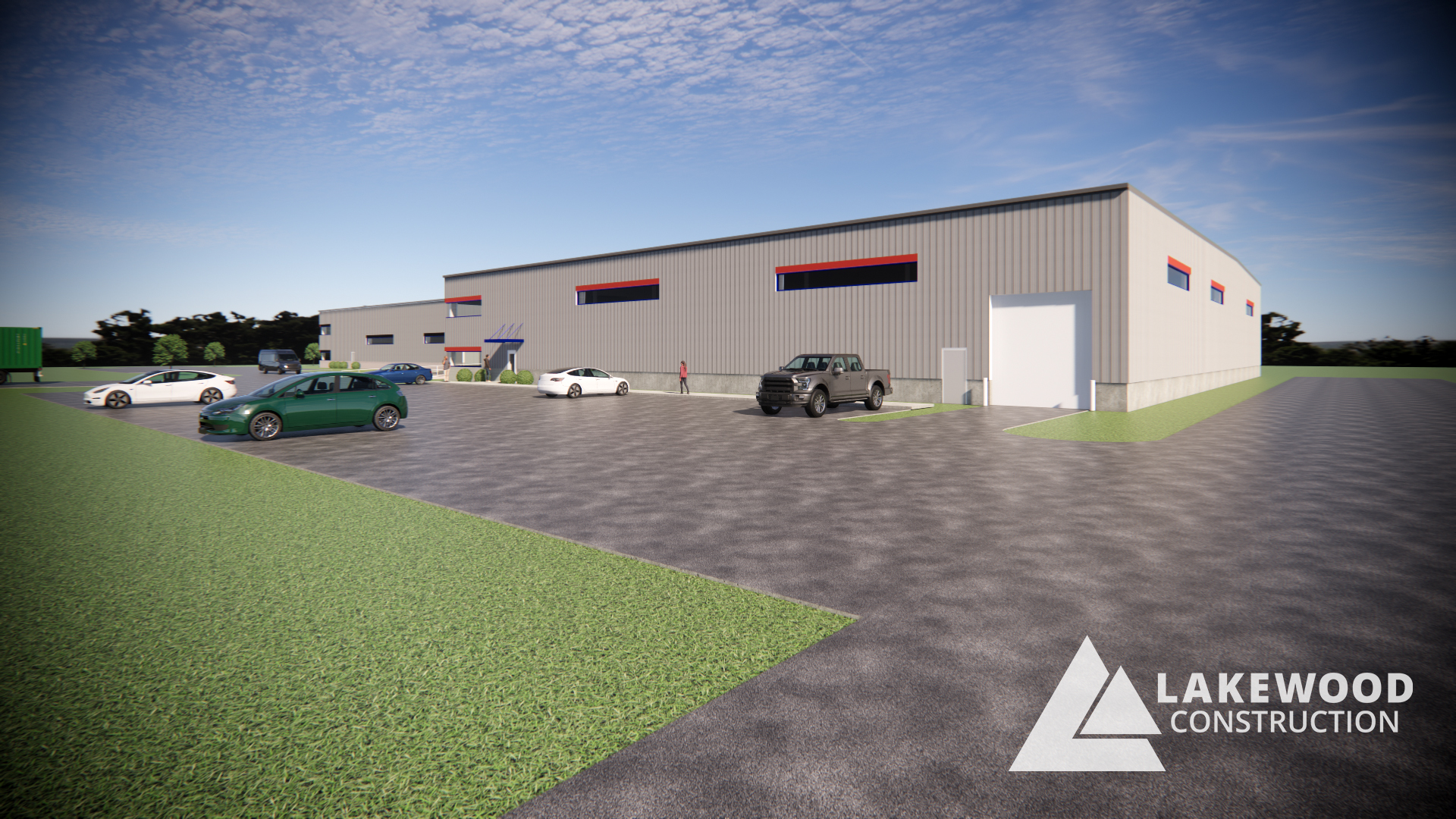
HOLLAND, Mich. (March 17, 2023)—Liberty Plastics, based in Holland Charter Township, Michigan, announced they are expanding. The company, which has been operating at capacity in its current space, is investing $3 million to build out its Holland headquarters and continue to grow in the custom plastic injection molding and assembly business. The expanded operations will result in ten new jobs for production workers and other opportunities.


Liberty-Plastics_Lakewood-Construction_Manufacturing_Addition_Rendering-1-64.jpg

“West Michigan is a great place to build a strong business,” said Rich Lynema, president of Liberty Plastics. “We have many supply partners and customers in the area that are essential to our continued success.”


Lakeshore Advantage, the economic development organization that navigates growth for employers in Ottawa and Allegan Counties, assisted the company in navigating local resources for its expansion. The 28,000-square-foot project will allow additional space and upgrades for multiple aspects of Liberty Plastics’ overall operations.


“Liberty Plastics delivers key services to a depth of manufacturing businesses in and outside the region and strengthens the local economy” said Jennifer Owens, President, Lakeshore Advantage. “We are grateful to have them here.”


The family-owned company serves a range of industries including furniture, automotive, recreation, agriculture, consumer goods and construction. The expansion adds to the ecosystem of manufacturers in these industries.


Holland Charter Township is supporting this project in the form of a 12-year Industrial Facilities Tax Exemption which was approved on March 16.


Liberty-Plastics_Lakewood-Construction_Manufacturing_Addition_Rendering-2.jpg


“Holland Charter Township is pleased to have Liberty Plastics expand their operations,” said Holland Charter Township Manager, Steve Bulthuis. “Their investment supports the economic health and vitality of the Township and larger community.”

Skip to content