Back

News

Water Main Infrastructure Grant to Spur Economic Growth in Coopersville

COOPERSVILLE, Mich. (March 24, 2026)— A $17 million infrastructure grant to the city of Coopersville was approved today by the Michigan Strategic Fund board. This grant will advance a transformational regional water system upgrade helping enable a production expansion of ultra-filtered milk producer fairlife. This public infrastructure grant will allow fairlife to create more than 150 new jobs and secure more than 400 existing positions at the company.


“Investments like this strengthen the region well beyond a single project,” said Jennifer Owens, president of Lakeshore Advantage. “The combination of private investment and public infrastructure improvements helps address longstanding capacity constraints, supports existing employers and creates the conditions needed for future business growth and job creation across the community. It also builds momentum for the Lakeshore’s growing agribusiness and food production industry cluster, where reliable infrastructure and a strong supply chain are essential.”


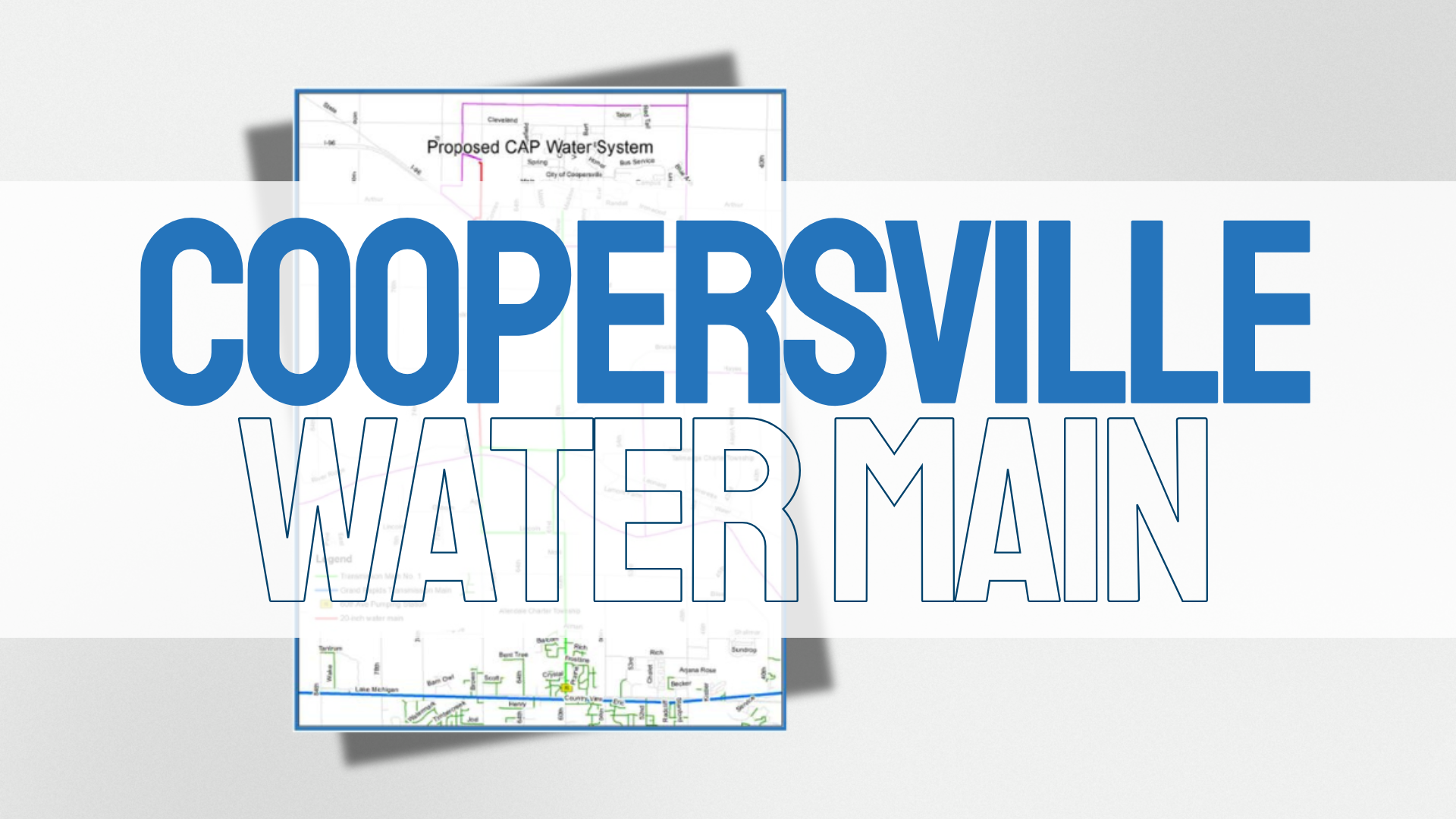
The proposed grant will allow the city of Coopersville to add a 20-inch transmission main and additional water storage tank adding the ability to provide 1.1 million additional gallons of water per day. This state grant serves as the initial funding to begin a three-phase water infrastructure upgrade plan estimated to cost nearly $47 million. The additional infrastructure costs will be covered by major water users and community service agreements.
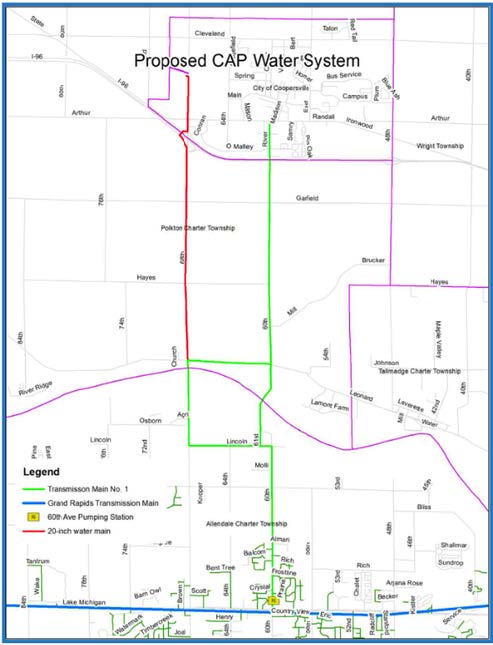


Currently, the city of Coopersville relies on a single, aging 16-inch water main that is more than 50 years old. This line is an obstacle to industrial growth, housing development and commercial growth.


“This project is not only about improving essential services for our residents and businesses, it also positions us for continued economic growth,” said Dennis Luce, City Manager for Coopersville. “In particular, it supports the expansion of fairlife, one of our largest local employers, which is a significant win for our agricultural community here in West Michigan and for dairy suppliers across the entire state. This is the kind of forward-looking investment that benefits our city, our region, and Michigan as a whole.”


This water infrastructure investment offers opportunities beyond the city of Coopersville. It may also offer additional water capacity to Polkton Township, Allendale Charter Township and Tallmadge Township should those communities choose to utilize it. The city of Grand Rapids provides water to these communities through a partnership agreement with Ottawa County.


“Ottawa County relies on strong regional partnerships to provide water service throughout the county, and this project is another great example of the benefits to that approach,” said Patrick Staskiewicz, Public Utilities Director at Ottawa County Road Commission. “There are direct benefits to Coopersville and to the Polkton township residents along the route. With a large industrial user like fairlife, this project will also help to keep rates stable for the users of the Grand Rapids Water System and the Muskegon County Wastewater System.”


The strengthened water system and added capacity will help retain and grow Michigan’s food production and agriculture economy by supporting employers that rely on predictable, high-capacity water service. Improvements will encourage a healthier tax base and long‑term community revitalization.


“The West Michigan agribusiness corridor is a significant component of Michigan’s overall economy, and it is imperative it has the infrastructure it needs to produce high-quality, high-recognition products that people across the nation know and enjoy,” said Quentin Messer, Jr. CEO of the Michigan Economic Development Corporation and chair of the MSF Board. “We are thrilled to offer our support to the City of Coopersville and fairlife for projects that will impact every component of our ‘Make it in Michigan’ economic development strategy focused on People, Places, and Projects. We are grateful for fairlife’s vote of confidence in Michigan and commend Lakeshore Advantage for their teamwork in securing this win.”


Increased production capacity at the fairlife facility in Coopersville will strengthen demand for dairy producers and suppliers in the region. For each direct job at the facility, 10 additional dairy jobs are projected to help supply the increased capacity. Over 7,000 jobs with average earnings of approximately $87,000 per job are supported by the food manufacturing cluster in the Lakeshore region (Ottawa and Allegan Counties), according to Lightcast.


Back

News

Lakeshore Advantage Creates Community Development Director Role to Tackle Workforce Housing

HOLLAND, Mich. (February 4, 2026) – Lakeshore Advantage is taking a proactive role in advancing workforce housing development across Ottawa and Allegan counties with the hiring of housing specialist Chris Marco as its first community development director.


Recent housing needs assessments for the two counties, conducted by Bowen National Research, have identified a combined shortage of approximately 22,700 housing units. Employer and employee feedback affirm the assessments:


  • A 2023 emerging worker study commissioned by Lakeshore Advantage cited housing availability and affordability as a limiting factor for locating in the region.
  • Lakeshore Advantage’s business intelligence research shows that local employers point to housing challenges as a major obstacle to recruiting and retaining talent.


“As we’ve listened to our primary employers and studied the data, the message is clear: housing is economic development,” said Jennifer Owens, president of Lakeshore Advantage. “If we want to remain a business and talent magnet, we must ensure the people who power our companies can also find a place to call home here. This is a complex challenge, and it requires coordination, creativity, and trusted partnerships. That’s the role we’re stepping into.”


Lakeshore Advantage will act as the regional connector for Allegan and Ottawa Counties, bringing together housing stakeholders and moving projects from planning to completion. Key activities include fostering collaboration, offering technical assistance to communities and developers, and sharing workforce housing best practices. Workforce housing is affordable for households earning 60-120% of the area’s median income.


“Workforce housing solutions need to be tailored to meet the needs of every community,” said Marco. “My role will support local leaders and developers in identifying and understanding the tools available—from state and federal financing programs to innovative local strategies—and bring the right partners to the table. When we align resources and move projects forward thoughtfully, we strengthen both our communities and our economy.”


Marco brings experience in housing and community development policy at both the state and local levels. As community development director, he will serve as a connector and facilitator, helping communities navigate funding opportunities and structure viable projects that meet local needs.


Marco started with Lakeshore Advantage on Feb. 2. Prior to joining the organization, he managed community development projects across the state at the Michigan Economic Development Corporation. He began his career with the City of Grand Rapids, where he managed grant programs, supported housing projects and conducted public policy research. He holds a master of public administration in state, local and regional governance from Grand Valley State University.


Over the past several years, Lakeshore Advantage has been working with county leadership, community foundations, chambers of commerce, and developers to identify the obstacles to developing workforce housing in the Lakeshore region. This new focus for Lakeshore Advantage was made possible due to grants from the Grand Haven Area Community Foundation and Haworth Helps, a corporate giving fund of Haworth, Inc.


In addition to local stakeholders, Lakeshore Advantage will also be working in partnership with Housing Next, a regional partnership focused on guiding best practices in housing development and housing policy across a 13-county West Michigan region. Housing Next has supported the Lakeshore region since 2017 and will continue to offer policy leadership and technical expertise.

Back

Investor Spotlight

Investor Spotlight

Tim Schowalter

Tim Schowalter’s leadership story begins in Richland, Michigan, where he grew up learning the value of hard work at a young age in his father’s auction business. After earning a Civil Engineering degree from Michigan State University, Tim joined Pioneer Construction in 1995 — beginning a career defined by steady growth, principled leadership, and long-term community investment.


In 2005, Tim and his wife Barbie completed the purchase of Pioneer Construction. Today, he serves as President & CEO of the Grand Rapids–based contractor, leading a company with annual revenues exceeding $300 million and approximately 250 full-time employees.


1. What core values guide Pioneer Construction, and can you share an example of a project that reflects those values and has had a positive impact on the West Michigan community?

Pioneer operates by a written creed that defines how the company works and leads. The nine core values are:

  • People make the difference
  • Attitude shines through
  • Integrity is essential
  • Accountability matters
  • Work hard, work safe
  • Finish the job
  • Experience matters
  • Teamwork is crucial
  • Responsiveness is the secret ingredient

These values guide not only project execution but also client relationships and internal culture.


A recent example is the Maranatha Tabernacle project in Norton Shores. Rather than tearing down a beloved community landmark, Pioneer helped restore and expand it — honoring its history while bringing new life to the space. The alignment of values between the construction team and the client made it possible to complete the fast-tracked project on time and on budget. The result is a revitalized venue that continues to serve as a centerpiece for the community.


2. How do you motivate and inspire your team to achieve their best performance?

At Pioneer, motivation begins with hiring people who are already driven and who enjoy helping others succeed. Construction is inherently rewarding — builders can look back at what they’ve created and feel the satisfaction of a tangible accomplishment.


The team celebrates wins and looks forward to future projects with enthusiasm. That cycle of building, completing, and improving keeps motivation strong and creates a culture where people take pride in their work.


3. What key experiences have shaped your leadership approach, and what about your work has you most excited right now?

Tim describes his leadership journey as a “trial by fire.” Early in his career, he was placed in positions where he didn’t always feel fully qualified. That experience shaped his belief that young professionals often have untapped potential they may not yet recognize in themselves.


He is most excited about watching emerging leaders within Pioneer step into responsibility, grow their capabilities, and accomplish meaningful work. Seeing others develop into strong leaders is one of the most rewarding aspects of his role.


4. How do you stay updated on industry developments and ensure Pioneer remains competitive in a rapidly evolving construction landscape?

Pioneer stays competitive by remaining deeply engaged in industry associations, peer networks, educational institutions, and client relationships. The company actively listens to subcontractors and clients to understand market trends and evolving expectations.


Notable initiatives include:

  • Being the first contractor in West Michigan to hire a dedicated Construction Technologist to vet and implement emerging technology.
  • Early adoption of LEED-accredited project management staff and completion of certified sustainable projects.
  • Development of an award-winning, data-driven safety program.
  • Production of weekly safety training videos to keep safety top of mind across all teams.


Pioneer also shares safety best practices with other contractors, reinforcing the belief that raising standards benefits the entire industry and community.


5. What advice would you give to people aspiring to leadership roles?

Tim encourages aspiring leaders to:

  • Learn all aspects of the business.
  • Be patient — experience takes time.
  • Stay curious and ask questions.


He compares leadership to learning an instrument: mastery requires years of practice, learning from mistakes, and continual growth. There is no shortcut for experience, but there is tremendous value in staying humble and committed to learning.


6. What do you enjoy most about living and working in West Michigan?

West Michigan offers both natural beauty and strong community values. While the changing seasons are a highlight, Tim values most the region’s people and their strong moral compass. Doing business with individuals who prioritize integrity makes both professional and personal life more fulfilling.


7. Why does Pioneer Construction find it important to invest in and work with Lakeshore Advantage?

Job creation and community development are essential to regional growth. Lakeshore Advantage plays a critical role in attracting and supporting innovative businesses in West Michigan.


The benefits of this work extend to every family in the region. By helping businesses grow and thrive, Lakeshore Advantage strengthens the entire ecosystem — and Pioneer directly benefits by helping build the physical spaces that support that growth.


West Michigan offers more than a product — it offers a way of life. Pioneer exists to help build a growing West Michigan, and partnership with Lakeshore Advantage helps make that possible.

Back

News

Lakeshore Advantage Releases 2025 Annual Report

HOLLAND, Mich. (February 9, 2026) – Lakeshore Advantage, the regional economic development organization serving Allegan and Ottawa counties, shared highlights from a pivotal year at its annual meeting held late last month, bringing together business, civic, and community leaders from across the Lakeshore region. The organization’s 2025 Annual Report reflects a year defined by listening closely to the business community and charting a thoughtful, steady course forward amid evolving economic conditions.


“As AI, automation, and global shifts reshape every industry in 2025, we chose to act,” said Jennifer Owens, president of Lakeshore Advanage. “We leaned into what our employers, entrepreneurs, and communities need now investing in talent, infrastructure and innovation. Guided by our grow, plan, solve framework, we’re serving as the region’s economic GPS, helping leaders navigate today’s disruption and positioning the Lakeshore to remain a business and talent magnet for years to come.”


Throughout 2025, Lakeshore Advantage advanced its role as the Lakeshore region’s economic GPS—growing, planning, and solving alongside employers and communities. That approach connects real-time business intelligence with coordinated action to strengthen the region’s economic foundation.


2025 highlights include:


  • Support for eight business expansion projects representing 231 new jobs, 592 retained jobs and $131.9 million in private investment, contributing to continued economic momentum and competitiveness.
  • Engagement with 250 primary employers and 130 in-depth business intelligence interviews with regional executives.
  • 128 companies supported through the SURGE ecosystem, with more than $4.5 million raised by participating startups.
  • Collaboration with 82 strategic partners and 65 HR leaders to address workforce, talent, and long-range regional challenges.
  • Launching the Next Gen Talent Council representing 17 industries across the region to implement a talent retention and attraction strategy.


Beyond these outcomes, 2025 also marked a significant organizational milestone: Lakeshore Advantage’s first full year operating out of the Next Center. The space quickly became a hub for collaboration among entrepreneurs, employers, students, and partners. As a result, SURGE memberships grew by 60% to more than 50 companies, expanding access to coaching, mentorship, and accelerator programming designed to help startups move from idea to investable business.


“Entrepreneurship is a critical part of economic development. Startups and second-stage companies help existing industries evolve, create new industries, diversify the economy, and help regions adapt as markets, technology, and workforce needs change,” commented Nora VandenBrink, vice president of entrepreneurship. “A strong entrepreneurial ecosystem ensures that an economy isn’t overly reliant on a single sector or employer but is continuously renewed from within.”


A digital version of the 2025 Annual Report, including a full overview of initiatives and outcomes, is available at https://lakeshoreadvantage.com/invest/.

Skip to content