Back

Blog

Building Momentum: A Look at the Lakeshore’s Q1 Impact

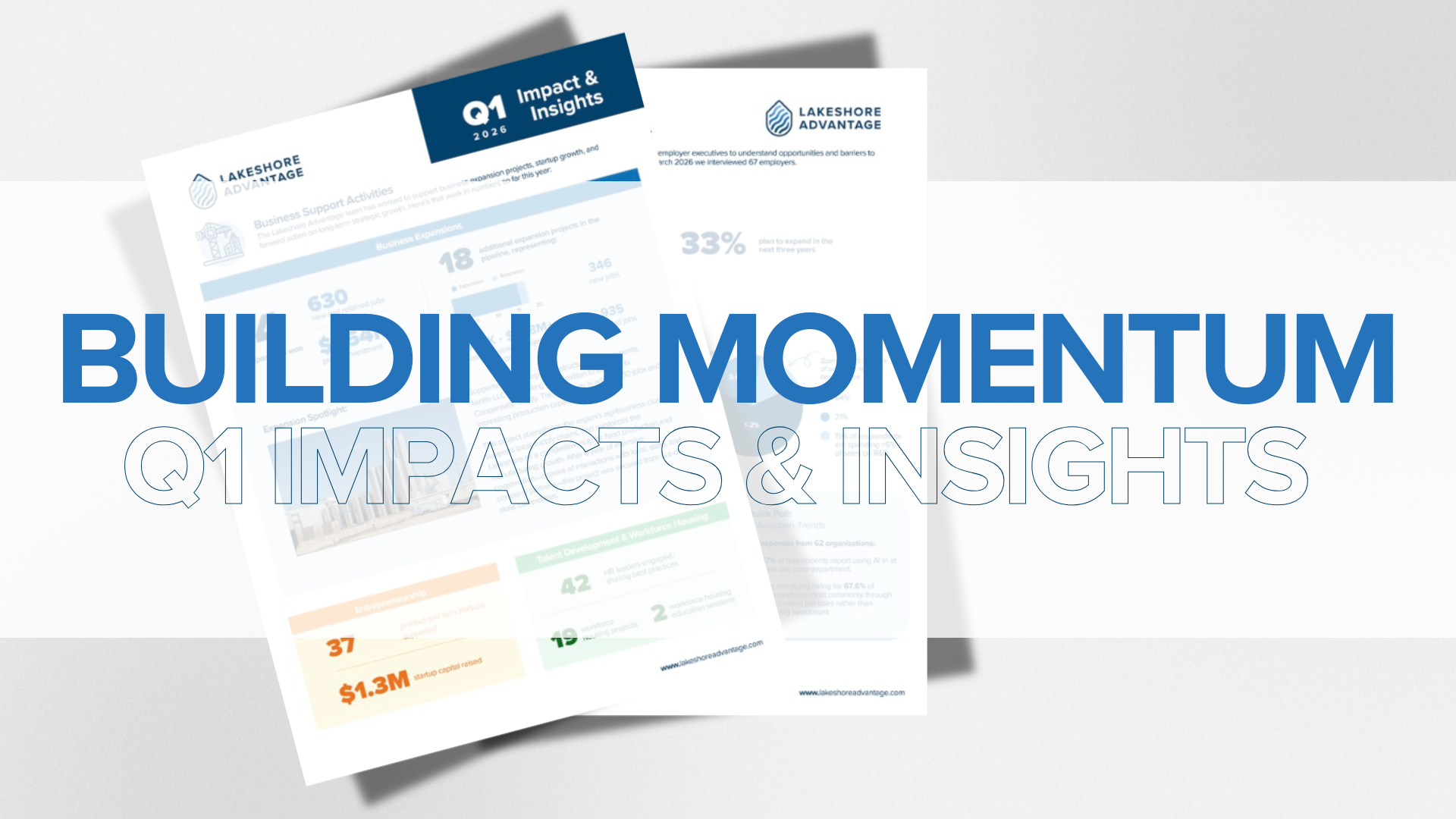
Lakeshore Advantage finished the first quarter of 2026 with a strong start to the year. The organization translated strategy into measurable impact across business growth, talent, and entrepreneurship. In the first quarter, the team supported four business expansions totaling nearly $654 million in private investment and 630 new and retained jobs, while continuing to advance 18 additional projects in the pipeline.


One standout example is fairlife’s expansion in Coopersville, a $650 million investment creating 150 jobs. Just a year ago, this project was likely headed out of state. Through coordinated effort with local partners, state agencies, and elected officials, the team helped secure a transformational win that strengthens the region’s agribusiness cluster and reinforces the Lakeshore’s competitiveness.


Beyond business attraction and expansion, Lakeshore Advantage supported 37 startups, helping generate $1.3 million in startup capital, and continued advancing workforce housing solutions, with 19 projects in progress and ongoing employer engagement. This work reflects a balanced approach supporting immediate growth while addressing the long-term factors that sustain a thriving regional economy.


Insights from recent business retention visits also provide an important pulse on the region’s employers. Over the past six months, 67 companies were engaged, with 33% indicating plans to expand in the next three years . At the same time, talent continues to be a key pressure point, with 40% reporting ongoing recruitment challenges. Encouragingly, innovation remains a focus—59% of companies have introduced new products in the past three years—though only 15% report R&D investment levels that meet national best practice benchmarks. Taken together, these insights highlight both the resilience of the region’s business base and the need to continue addressing workforce and innovation capacity to sustain a thriving regional economy.


The first quarter results underscore a clear theme: progress is happening, and it’s powered by collaboration, persistence, and a shared vision for the Lakeshore’s future.
Back

Blog

Beyond the Blooms

Beyond the Blooms: (April 30, 2026) The Holland business building the systems behind the products in your shopping cart 


It started with a need from Ford Motor Company. Fifty years ago, Ford was looking for a better way to handle plastic pellets, the tiny raw materials used to make countless products. When the opportunity wasn’t a fit for one West Michigan business, an entrepreneurial leader found their opening for a new business. 


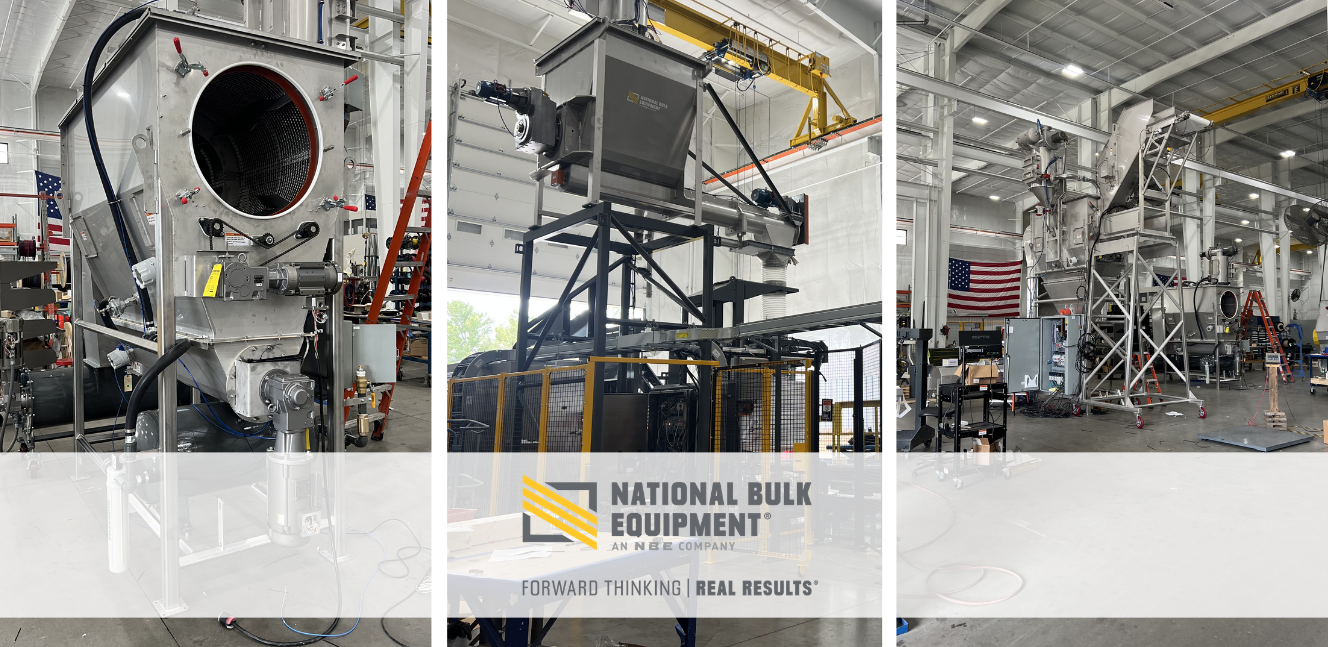
Joseph M. Reed founded National Bulk Equipment (NBE) in Holland, Michigan, and got to work on solving Ford’s problem. Over the next five decades, the company would grow from a focused plastics solution into a global engineering partner whose systems now touch products in nearly every shopping cart. From food and beverage to household goods to industrial materials. NBE’s work quietly powers our everyday lives.  


From One Problem to Everyday Solutions 

In the early days, NBE focused on one thing: moving and storing plastic pellets better than anyone else. But solving that problem opened the door to something bigger. Customers didn’t just need equipment. They needed systems. Today, NBE designs and builds fully integrated, engineered-to-order solutions that handle everything from dry ingredients to liquids across industries like food, chemicals, and advanced manufacturing.  


Many of those projects are one-of-a-kind. Customers bring complex challenges without clear answers, and NBE builds something entirely new to solve them. 


A Family Business That Builds Differently 

Now 50 years in, NBE is still family owned, and still in Holland. 


Ryan Rose, grandson of the founder, is part of the next generation carrying that legacy forward, he explains that the philosophy hasn’t changed: start with the customer’s challenge, then solve the problem. That mindset shows up in everything they do. Long-tenured employees bring decades of expertise. Customers are treated like partners. Every system is designed not just to perform, but to make work safer, easier, and more efficient. 


It’s also why NBE keeps everything close to home—engineering, design, fabrication, and testing—all happening right here in Holland.  


The Work You Never See  

If you’ve never heard of NBE, you’re not alone. But their work has likely touched your life. 


Rose explains it like this: Imagine making 10,000 chocolate chip cookies every minute. You’d need systems to move thousands of pounds of ingredients, measure them precisely, and keep everything running without pause. That’s the kind of challenge NBE solves every day.  


In doing so, they’re eliminating the difficult, repetitive manual labor that once defined manufacturing—transforming how products are made and how people experience the work. 


One Company. A Much Bigger Story. 

NBE is one company—but it’s part of something much larger. 


Manufacturing makes up roughly 40% of the Lakeshore region (Ottawa and Allegan County)’s economy, a concentration far higher than most places in the U.S. And within that, a powerful smart manufacturing and automation sector continues to grow: 


  • $4.4 billion in annual output  
  • More than 27,000 jobs  
  • Average earnings over $95,000  
  • A workforce where nearly 9 in 10 roles are skilled positions  


This is one of the most concentrated advanced manufacturing corridors in the Midwest. Companies don’t just use automation, they design it, build it, tweak it, and push it forward.  


Built Here. Built for What’s Next. 

There’s a reason companies like NBE grow here and stay here. 


This region is built on people who take on hard problems and figure them out. The Lakeshore region is uniquely collaborative with a culture of strong craftsmanship and continuous learning and improvement.  


Fifty years after that first opportunity, NBE is still doing exactly what it set out to do. 


Solving problems others pass on, and building systems most people never see


They are shaping the future of how things are made, one solution at a time. 


Back

News

Lakeshore Advantage Creates New ‘Strategic Growth’ Business Unit, Promotes Team Members

HOLLAND, Mich. (April 22, 2026) — Lakeshore Advantage announces the creation of a new strategic growth business unit designed to strengthen the region’s long-term economic competitiveness and better align efforts that support both immediate business needs and future-focused initiatives. 


The new strategic growth department brings together the organization’s business solutions team, focused on retaining, attracting and growing primary employers, with its strategic initiatives work, which addresses broader, long-range challenges to economic success. These efforts include talent attraction and retention, workforce housing, and public-private collaboration. 


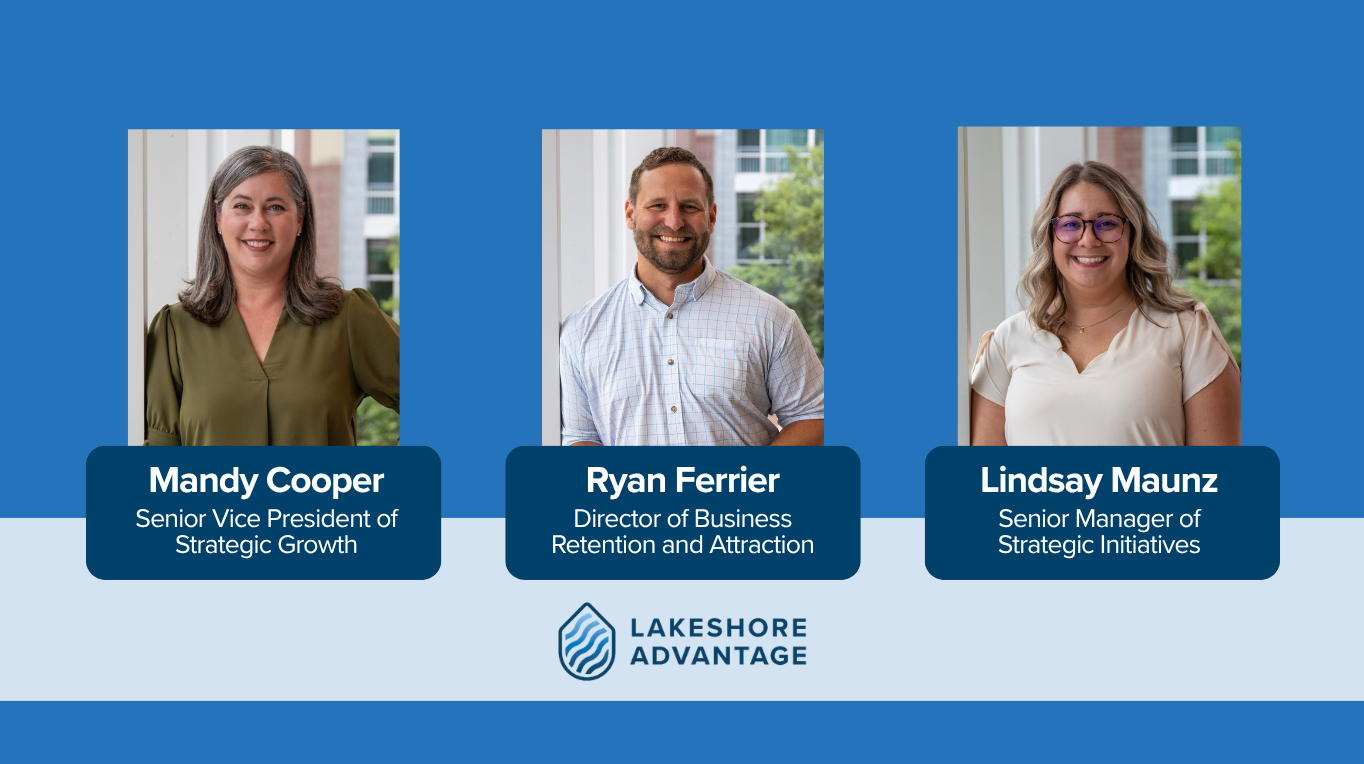
Mandy Cooper will lead the new department as senior vice president of strategic growth, overseeing a unified strategy that connects direct employer support with proactive solutions to regional challenges. 


“This new structure reflects how business growth actually happens,” said Jennifer Owens, president of Lakeshore Advantage. “Companies need strong, responsive support today, but they also rely on a region that is planning ahead, whether that’s talent, housing or infrastructure. By bringing these efforts together, we can be more intentional and more impactful.” 


As part of this transition, Lakeshore Advantage has announced the following staff promotions: 


Ryan Ferrier has been promoted to director of business retention and attraction. In this role, Ferrier will lead efforts to support the growth of existing employers and attract new investment to the region, working closely with companies to navigate expansion opportunities and challenges.  


Lindsay Maunz has been promoted to senior manager of strategic initiatives. She will lead key initiatives that positively impact regional economic challenges and opportunities, including cross-sector collaborations and projects that support long-term economic vitality.  


The creation of the strategic growth unit reflects Lakeshore Advantage’s continued evolution as an economic development organization focused not only on business attraction and retention, but also on shaping the conditions that allow companies and communities to thrive. 


“This is about aligning our work with the realities our employers face,” said Cooper. “We’re focused on being both responsive in the moment and proactive for the future, ensuring our region remains competitive, relevant and positioned for long-term prosperity.” 


Back

Investor Spotlight

Investor Spotlight

Shaun Hintz

Shaun Hintz is a seasoned operations leader serving as General Manager at Magna Exterior’s Engineered Glass Division in Holland. In this role, she leads 1,000 employees in two facilities and supports a $300-million business portfolio. Her team is focused on the innovation of new production lines, operational excellence and continuous improvement. Hintz was Magna’s first chair for the Magna Women’s eXchange, a resource community that promotes an inclusive environment enabling women to advance their skills and leadership potential.


Prior to joining Magna in 2014, Hintz worked for Tier 1 automotive companies in engineering and account-management roles. She also owned and operated two non-automotive startup companies while raising her young children. She is a graduate of Michigan State University’s College of Engineering and earned an MBA from Wayne State University. She is an active member of her community in western Michigan, where she volunteers in her local schools and community organizations.


What led you down your professional path—from early interests to your education and the start of your career?


Problem‑solving and an entrepreneurial mindset drew me to engineering, and I quickly found that Magna’s decentralized, entrepreneurial culture was the perfect fit. The company’s commitment to developing talent has allowed me to grow through five different roles—both vertically and horizontally—which has continually expanded my perspective and leadership capabilities. That blend of autonomy, support, and opportunity has shaped my career more than anything else.


What drew you into the engineered glass and advanced manufacturing industry, and what about the work do you find most meaningful or fascinating?


I was drawn to engineered glass and advanced manufacturing because it blends complex problem‑solving with the opportunity to directly impact the products and communities we serve. The fast‑paced, customer‑focused environment of manufacturing energizes me, especially when I can help plants tackle challenges and elevate performance. What I find most meaningful is how Magna’s entrepreneurial structure gives me the freedom to innovate and grow across multiple roles while contributing to an industry that is constantly evolving.


In a fast-paced production environment, how would you describe your leadership style? How has it evolved as you’ve taken on greater responsibility?


My leadership style centers on empowering people through trust, clarity, and empathy; really taking the time to understand how each person is naturally wired so I can help them thrive in the work they enjoy and do best. As I’ve taken on greater responsibility, I’ve realized that truly letting go and shifting from being the problem solver to being a growth‑minded leader is something I’m still working on every day, especially in a challenging manufacturing environment. What keeps me grounded is focusing on people, fostering an entrepreneurial spirit, and learning to lead in a way that builds other leaders, not just solutions.


What are the biggest trends or challenges impacting engineered glass manufacturing today, and how is your team responding to stay competitive?


Windows remain essential on every vehicle, so optimizing our cost structure and continuing to deliver strong products and customer support keep us well positioned across all vehicle platforms. Our biggest challenges today include rising material costs, tariffs, and ongoing labor and housing shortages in our region, which make it difficult to attract and retain talent. To stay competitive, we are partnering closely with our vendors, investing in community relationships and apprenticeship programs, and using automation to strengthen both quality and efficiency while building on our leadership in sliding truck window production.


What do you enjoy most about living and working in West Michigan?


What I enjoy most about living and working in West Michigan is the strong sense of community and the way people genuinely support one another. This is home for me, as I grew up in West Michigan and my husband grew up on the lakeshore, and it is hard not to love such a beautiful place with its natural surroundings and all the amenities it offers. It is a region where relationships matter, opportunities continue to grow, and you can make a meaningful impact both at work and in the broader community.


Why is it important for Magna Engineered Glass to invest in and work with Lakeshore Advantage?


Partnering with Lakeshore Advantage is essential because our long-term success depends on a strong, healthy community and a reliable talent pipeline, both of which are core priorities for the organization. With labor and housing shortages creating real challenges in our region, Lakeshore Advantage helps connect us with resources, partnerships, and initiatives that support workforce development and business growth. Their commitment to strengthening the local economy aligns directly with our focus on expanding opportunity, investing in people, and ensuring Magna Engineered Glass remains competitive in West Michigan.

Skip to content