Back

Investor Spotlight

Investor Spotlight

Scott Lubbers

Bio 
Scott Lubbers
Lakeshore Market Executive
Vice President, Fifth Third Bank


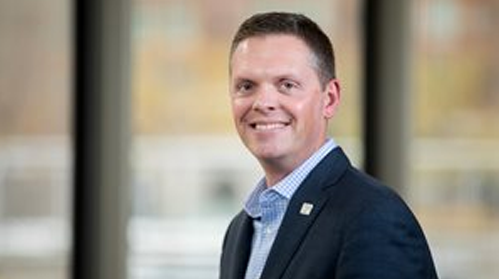
Scott Lubbers serves as the market executive and vice president of commercial banking in West Michigan. He is responsible for understanding the objectives of middle market clients and partnering with them to deliver solutions that fit their needs. Scott’s focus is predominately on the lakeshore, west of the Grand Rapids market.

Headshot-Lubbers.jpg

Scott has more than 18 years of well-rounded experience in commercial banking working with business owners. He began his career with Fifth Third in 2002 as a commercial credit analyst where he gained insight and expertise analyzing financial statements. Since that time, he has served in roles in commercial real estate, business banking and commercial middle market. In 2014 Scott became the lakeshore market executive overseeing Fifth Third Bank’s community activities.


Education
Scott earned both his bachelor’s degree in business administration and his master’s degree in business administration from the Seidman College of Business at Grand Valley State University.


Professional and Civic
Scott serves on the board of the Boys & Girls Club of Greater Holland and Lakeshore Advantage. He is also involved in his church as a board member at Ridge Point Community Church. His previous board positions include Good Samaritan Ministries and Lakeshore Habitat for Humanity.


Questions:

Scott, you have years of Senior Executive leadership experience, in which I’m sure a lot of lessons were learned. What has been one that you’ve been able to pass along?

People don’t care how much you know until they know how much you care – Theodore Roosevelt


I’ve been fortunate enough to learn from some great leaders and friends who actively live this quote daily.  We are at our best when we are in genuine relationship with others – the last year has reminded us of this fact.  Ideas flow naturally, best efforts are offered, continual learning is sought, and healthy pride exists when relationships are healthy.  This applies to all areas of life of course.


In banking, we realize and are thankful that our business is still largely relationship based.  Our team genuinely enjoys competing and serving our clients together.  We take pride in knowing and caring for each other “off the field” and realize that these healthy relationships among colleagues allow us to seek the same partnerships with our clients.  Genuine relationships cause us to be our best and bring joy and fulfillment to our work.


Talk to us about company culture. What are some values that you and your team live by?

One of my primary responsibilities in leading our Lakeshore banking team is creating an environment where we deliver the whole bank to our clients.  We can only do this with a healthy culture.  It isn’t about the next transaction or closing.  Our bankers ask great questions, listen, and respond with sound advice and banking solutions.  Our culture is driven by these guiding principles.


Why We Do What We Do:  
Our vision is to be the One Bank People Most Value and Trust.  The “One Bank” part of our vision means going to market together – understanding our client’s business and personal objectives and responding with a coordinated effort from professionals across multiple lines of business.


Customer At The Center:
We work hard to improve the lives of our customers, our communities, and our employees.


What We Do To Deliver Value:

  • Build a Stronger Community – Effect positive change. Empower the underserved.  Be actively engaged.
  • Provide Better Solutions – Drive product and service innovation.  Provide a world-class customer experience, every single time.
  • Strive for Operational Excellence
  • Continuously Manage Risk – Challenge ideas.  Test soundness.  Promptly escalate issues.


How We Act & Interact With Others:

  • Work As One Bank – Proactively collaborate to achieve shared goals.
  • Take Accountability – Own what you do.  Speak up if something feels wrong, looks wrong, or is wrong.
  • Be Respectful & Inclusive – Respect diversity.  Fully integrate ideas from varying perspectives.
  • Act With Integrity – Be honest.  Be fair.  Do the right thing.


Fifth Third Bank has been instrumental this last year, helping to connect businesses to loans to keep them afloat during the pandemic. Can you share any significant stories from that experience?

The pandemic dramatically changed the way we needed to serve our clients in 2020.  Our team adapted quickly to the new environment – many working remote while our fearless retail team gave an extra effort to keep our financial centers open for our customers.


The Paycheck Protection Program (PPP) grabbed most of the banking headlines in 2020 and rightly so.  At Fifth Third our team stepped up by processing $5.4 billion in PPP loans to over 40,000 businesses that helped protect 605,000 jobs (including nearly 50,000 jobs here in West Michigan)!  Every industry was impacted differently by the pandemic.  For bankers last spring PPP become essentially 100% of our job, and obviously this work was vital when considering the numbers above.  Our clients were depending on us to provide this critical funding.  The waters were rough when the program was rolled out as the SBA was forced to set up quickly, rules changed often, and we were all trying to figure out exactly what COVID-19 was.  But we stuck together.  Our clients trusted us to execute PPP for them so they could focus on successfully managing their business.  I am proud of the tireless work our team put in (sometimes around the clock) to deliver for our customers.  Banker’s hours no longer exist!  We will see if my friends ease up on those jokes!


Fifth Third has a long history of giving back to and investing in our community.  We’ve been serving West Michigan for over 160 years.  In 2020 it would have been easy to pull back given the uncertainty around us, but instead our team leaned in.  I’m proud of that fact, but even more proud of the extra effort that went in to listening to our key frontline community partners.  Knowledge learned from them allowed us to develop a plan that provided immediate funding for urgent pandemic-induced issues while also supporting our key long-term partners.  We’re not here to simply provide financial services but believe that our mission is to strengthen families and build a stronger community.  That commitment was on display in 2020!


What is a book that you’ve read or an influencer that you watch that has made you a better leader?

Andy Stanley has a number of books and teachings on life and leadership.  His most recent book “Better Decisions, Fewer Regret” contemplates the importance of asking five critical questions to aid in decision making.  In our house we talk all the time about the importance of making good decisions – small and large.  Our decisions determine our future and write our story.


Given this month is Black History Month, can you speak to Fifth Third Bank’s DE&I efforts?

Fifth Third strives to be the One Bank that people – all people – most value and trust.  I am grateful that we as a bank are committed to supporting and promoting diversity, equality and equity, both within the bank and in our communities.  Without action though, nothing changes.


In addition to living our core values, operating our business ethically and treating employees with respect, we are focused on six bold goals to support DE&I.  In 2020 we accelerated our focus to achieve meaningful results by 2025:


  1. Complete unconscious bias awareness training for 100% of employees
  2. Ensure the diversity of our workforce matches the markets we serve
  3. Grow leadership positions at each management level for women and persons of color
  4. Create a work environment where there is no disparity in race or gender
  5. Advance the bank as a leader in diversity and inclusion
  6. Achieve and sustain a 10% supplier diversity spend


Can you share why it’s a priority to Fifth Third Bank to invest in economic development, specifically our Annual Investor Briefing?

Fifth Third Bank has invested in the work of Lakeshore Advantage since its founding days in 2003.  Having a healthy economic development organization is key to our region’s long-term health.  The work of Lakeshore Advantage aims to ensure that current and future generations want to live and work in our vibrant economy.  We all have a role to play in shaping our future and that is why we invest in this work.  Knowing that a highly talented group of professionals are executing every day at Lakeshore Advantage makes that decision even easier.  This group works tirelessly to gather information, turn that data into a strategy to help us get better, and prepare us for where the puck is going in the future.


The Annual Meeting is always an enjoyable event where we have a chance to interact with friends, clients, and colleagues.  The event is always well done and balances the right amount of storytelling from the past with challenges for us all looking forward.  With the need to take the 2021 meeting virtual the team stepped up to create a memorable experience!
Back

Investor Spotlight

Investor Spotlight

Brian Pageau

Bio
Brian Pageau
President, Foresight Management

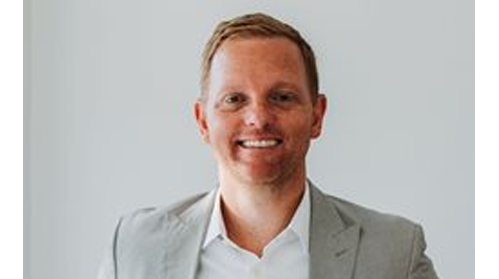
Brian Pageau lives in Holland, MI with his wife of 17 years, Anne, and their two young children, Maeve (2.5 yrs) and Simon (10 months). Nothing he is associated with below is remotely possible without his exceedingly talented partner in business and life, Anne Pageau.  Additionally, Brian has been supported and guided by amazing mentors, friends, and parents along the way.


“It takes a village” as they say…


image-40.jpg

Brian Pageau graduated from Hope College in 2003 with a degree in History and secondary education.  After teaching for a few years, he helped start an environmentally friendly office supply company.  In 2010, Brian joined Foresight Management (then Midwest Energy Group) in a sales and marketing role.  Brian was promoted to General Manager in 2013 and became President in 2015.  As President, Brian has led Foresight from a (5) employee Michigan-based energy retrofit contractor, to a (21) employee full-service energy and sustainability consulting firm with a global client base.


Brian currently serves as Board President of Community Action House (www.communityactionhouse.org), Board and Executive Committee member of the Michigan Energy Innovation Business Council (www.mieibc.org), and Chair of the Holland Community Energy Plan’s current Strategic Development Team.


Along the way…Brian co-founded MaxOne, (https://maxone.ai/) a SaaS start up in 2014, was named a Grand Rapids Business Journal “40 under 40” recipient in 2017, was a Varsity high school basketball coach from 2004-2015, was a Committee Member for Holland Area Young Life (https://holland.younglife.org/)
from 2005-2012, and served as the Citizen Spokesperson for Holland’s Community Energy Plan Commercial/Institutional task force in 2014.


Questions:

Brian, you have years of Senior Executive leadership experience, in which I’m sure a lot of lessons were learned. What has been one that you’ve been able to pass along?

Many people have seen potential and gifts in me that I did not see in myself.  They trusted me, encouraged me, gave me responsibility, and gave me autonomy when I had most definitely not yet earned those things.  They didn’t make me work to earn their trust…it was mine from the beginning, to keep, or to lose.


I can’t overstate how much that trust and belief in me has shaped me, so I do my best to pass those amazing gifts along to others.  Hopefully the people I interact with, especially those whom I work with, would say I passed trust, encouragement, responsibility, and autonomy on to them right from the beginning of our relationship.


Talk to us about company culture. What are some values that you and your team live by?

My primary responsibility at Foresight is to create an environment where our team members can become the best versions of themselves.  Not the best worker they can be for Foresight, but the best version of themselves as a human-being. If the people I work with are healthy and flourishing, we’ll get closer to fulfilling our purpose and mission as an organization. Our company’s culture is where I spend much of my time and I believe is the vehicle with which we unlock our potential as individuals and as a team.


Our four core values at Foresight are vulnerability, curiosity, enthusiasm, and competitive greatness.


We believe a thriving work environment is built on a foundation of vulnerability.  Each individual on our team must feel safe enough to be vulnerable and valued enough to be heard.  We believe great ideas can come from anyone on the team, regardless of position or experience.  If our people don’t feel it’s psychologically safe to share their ideas, then we are stifling innovation and human flourishing.  Additionally, it takes vulnerability to admit mistakes. We talk about and celebrate mistakes every Friday in our all-team meeting, so failure is de-stigmatized and people (hopefully) aren’t afraid of it.  Failure is simply an opportunity to learn, and we can’t learn from each other if we don’t feel the psychological safety that comes with healthy vulnerability.


We believe the root of all innovation is, in its most basic form, a spirit of curiosity and the continual adoption of a “beginner’s mindset”. Our willingness and capacity to be inquisitive empowers us to build trust with teammates and clients. Curiosity enables a sense of wonder and humility, ultimately exposing opportunities to serve teammates and clients in more impactful ways.  Curiosity is how we disrupt our own way of doing things.


We believe people and organizations care about energy and the environment, yet these same organizations often have higher priorities that diminish their ability to execute.  This gap, between “desire” and “action”, is basically at the core of why our clients hire us. Our insights, character, and expertise are qualities our team brings to our clients, but those valuable attributes are not enough to inspire action. Unbridled enthusiasm is contagious and the special ingredient we try to bring to our clients. Enthusiasm creates momentum and inspires action.


And finally, Competitive Greatness.  I’m a basketball coach at heart, so if you know hoops, you won’t be surprised to hear that John Wooden’s teachings have heavily influenced me. In his pyramid of success, Coach Wooden puts “Competitive Greatness” at the top of the pyramid and says, “Competitive Greatness is having a real love for the hard battle knowing it offers the opportunity to be at your best when your best is required.”


At Foresight, we believe Competitive Greatness is not limited to a particular function or moment in time, it is a posture and attitude we all strive to embody every day.  Our goal is to fall in love with the pursuit of being our best.  Energy and sustainability can be tough and challenging topics for many companies. When we are hired, our job is to embrace the challenge and relish in the opportunity to be our best when our best is required.


Sustainability is a topic that you and your team have deep and wide expertise on. Can you describe Foresight’s philosophy around sustainability and describe how it intersects with other business priorities? 

At Foresight, we believe Sustainability and its underlying business concepts and practices, is a driving force behind the shift from a “Shareholder Driven Economy” to an “Stakeholder Driven Economy”.  There’s a ton of great literature and content out there about these economic philosophies and the shift that is taking place, so I won’t go into detail here.  A simple way to think about it is the “Shareholder Driven Economy” is overly focused on driving value to shareholders to the point where other stakeholder groups are diminished, companies stop thinking long-term, and quarterly financial results are the only priority.  The “Stakeholder Driven Economy” is the idea that company decisions should create value for as many stakeholders as possible, and no decision is made at the expense of any one stakeholder group.  (Stakeholders at a company are typically defined as, employees, customers, leadership, shareholders, suppliers/vendors, the local community, and the natural environment the business operates in.)


Companies that pursue Sustainability and sustainable business practices (Stakeholder Driven Economy) have been proven to outperform other business models because they are purpose driven, attract better talent, are focused on innovation, are thinking about the long-term, and most importantly, are empowering human flourishing.


We believe financial excellence does not have to come at the expense of the environment, the worker, the customer, or a company’s supply chain.  In fact, we believe the opposite is true.  Lasting financial excellence happens because of value creation for the worker, the customer, the supply chain, and the environment.


It’s an honor and privilege for our team to partner with companies who choose to go on this journey, because when fully adopted, Sustainability is all-encompassing and transformational.


What is a book that you’ve read or an influencer that you watch that has made you a better leader?

There are way too many to name.  I love to read and listen to books, and I listen to a lot of podcasts as well.  Here’s a few that come to mind…in no particular order because I love them all!


  • Conscious Capitalism – John Mackey and Raj Sisodia
  • The Obstacle is the Way – Ryan Holiday
  • Lessons in Leadership – John Wooden
  • Dare to Lead, Daring Greatly, and The Gifts of Imperfection – Brene Brown
  • How to Win Friends and Influence People – Dale Carnegie
  • Drive – Daniel Pink
  • Delivering Happiness – Tony Hsieh
  • Start with Why – Simon Sinek (Ted Talk is just as good as the book in my opinion)
  • Good to Great and Great by Choice – Jim Collins
  • Grit – Angela Duckworth
  • Give and Take – Adam Grant
  • Culture Code and Talent Code – Daniel Coyle
  • Thinking in Bets – Annie Duke
  • Sapiens – Yuval Noah Harari
  • Principles – Ray Dalio
  • Flourish – Martin Seligman
  • Podcast – The Knowledge Project – Shane Parrish
  • Podcast – The Daily Stoic – Ryan Holiday
  • Podcast – Revisionist History – Malcolm Gladwell


Can you share why it’s a priority to Foresight Management as an energy and sustainability company to invest in economic development?

West Michigan is home to our workforce and many of our families, and even though many of our clients are spread out all over North America, we believe it’s so important to support our local economy however we can. The collaborative nature of economic development in bringing together large and small companies, non-profits, educational institutions and municipalities is inspiring and vital. In fact, it’s a great example of “Sustainability” at work!

Back

Investor Spotlight

Investor Spotlight

Jim Eickhoff

Creative Dining President & CEO Jim Eickhoff Serves Up Insight on Leadership, Sales Strategy and Employees as Family

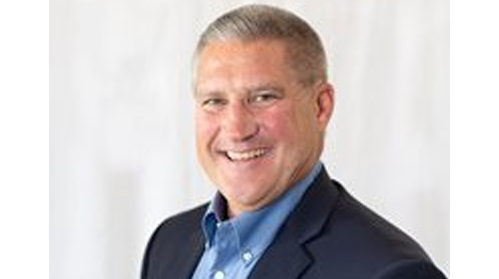
Head-Shot-Jim-Eickhoff-(1).jpgJim Eickhoff joined Creative Dining in 2015 after 35 years of senior executive leadership experience at Fortune 200 companies across the US, including the University of Phoenix/Apollo Education Group, Sallie Mae, HOSTS Learning, and The ServiceMaster Company. Under Jim’s leadership, Creative Dining has experienced 25% growth and leapt to the 24th largest food service management company in America.


Jim is the first non-founder serving as President & CEO. He is focused on excellent client experiences, providing outstanding dining programs with the highest level of customer service and integrity. Employee engagement and development are vital to Jim; he is committed to upholding a company culture of family while coaching employees to their unique strengths and potential. Jim looks forward to growing the business to serve even more delicious cuisine to satisfied customers. Jim received his B.A. in English and Secondary Education from Hope College in Holland, Michigan.


Interview:

Q: Jim, in your 35 years of Senior Executive leadership experience, what has been one lesson that you’ve been able to pass along? Talk to us about company culture. What are some values that you and your team live by?

A: One of our key core values is family. Our trademark is to take on the clients’ branding and culture – no Creative Dining Services logos on uniforms, menus, disposables, etc.  We want to become part of their family! Our dining and hospitality team is expected to act and live out their work life as if they were employed by our client. So, we encourage our staff to participate in fundraising events, sports, performing arts or social activities. Oftentimes when we attain a new piece of the business, the employees have been working for another company. During my transition visit with a new client I tell the team that I am looking forward to them welcoming me and leadership into their “home”. I thank them for having us into their work family.


Additionally, there is lots of discussion about accessibility to leadership. I provide all staff members in the organization with my personal work email along with my mobile phone number so that I can be available to talk or exchange ideas. Being in 14 states and having a roster of 2,000 employees, it is difficult to be in person to listen and share with our teams. In this vein, we send out a Weekly Digest newsletter to our leaders to share inspiration, news and trends that are relevant to our business and hold a weekly “Unscripted” video conference call to gather people together in a town hall type of environment that has no agenda, no planned monologue but simply an open forum for employees to ask questions and seek best practices from their peers. A key performance indicator that we report to the Board is the number of visits our executive leadership makes out with our customers.


Q: After graduating from Hope College you ventured outside of Michigan for work and now you are back. What sets working on the lakeshore apart from other areas in the US?

A: What my wife and I continue to pinch ourselves over is that we live in a resort setting here in West Michigan. Beautiful bodies of water, a strong four-seasons of the year experience and a location that allows a reasonable drive to delightful destinations in Michigan, Chicago, Indianapolis, etc.


West Michigan is home to highly cooperative companies who see the value of collaboration, treating employees well, and doing business ethically and sustainably. Accessibility to these organizations’ leaders sets up an atmosphere of collaboration and mentoring. Pooling together the experiences and people resources of all these organizations establishes the roots of success and influence on a global playing field.


Q: Under your leadership, Creative Dining has experienced significant growth and has leapt into the top 25 largest food service management companies in the US. To what would you most attribute this success?

A: First and foremost, we reset our focus on the fundamentals: Yummy food that blends both comfort and on-trend offerings; keeping “high touch” as part of our day-to-day efforts, shifting all foundational business functions from paper/pencil to cloud-based, real-time systems; a focus on retaining current business portfolios; some organizational restructuring so that team members can match their strengths to their responsibilities (most folks were miss-aligned and struggled, now they are fulfilled).


Our growth can be tied to clients who are desperate for hospitality partners who don’t play games and deliver personalized dining programs. So many dining programs today are off the shelf, one-size-fits-all and the personality and uniqueness has been sucked out of them because of cost cutting pressures.

Our clients – corporations, colleges, and even adult living communities – are eager to express their unique culture and brand inside their dining areas. They don’t want what everyone else has. They see a personalized dining experience as a competitive edge, and we do too.


When it comes right down to it, we are honest. We’re always looking for ways to improve the diner experience. We’re candid about where there’s opportunity for improvement and how we are addressing and improving it. We are transparent – we provide customers with data, suggestions and services in the way they want it. We are flexible – we personalize our services to the unique needs and nature of the client’s business.


Q: Many area companies are citing increased sales/marketing efforts as a top priority post-COVID shutdown. You’ve run large sales teams over the course of your career. What considerations should companies make as they venture into turning up their sales efforts?

A: My honest piece of advice here is not to “out fancy” yourself. If you Google “sales strategies,” there will be over 1.4 billion suggestions. It is overwhelming. In my experience, it comes down to first and foremost, being honest with yourself when it comes to the sales/marketing disciplines at your company. Is the foundation in place that allows you to pivot in times of crisis, keep the momentum going when times are “great” and do you have the right people directing the sales/marketing effort? I have lived by five key factors that have to be in place in order to have a winning strategy:


  1. Clear on your core competencies and deliverables: Don’t sell something you don’t have or can’t do.
  2. A list of key “funnel” elements to determine prospects that in turn either qualifies or disqualifies a prospect:  I.e. geography, size of prospect, culture match, production capability, etc.
  3. A contact management system that will organize all sales/marketing efforts from first activity to marketing campaigns to winning the deal that then can be transitioned to operations.
  4. A sales and marketing plan:  Written down and revised each year.
  5. Proposal design that has all…really mean it…all stakeholders involved in the creation of the deal.


To help keep our organization honest with itself, I have always sought out a detached (not internal) group or person that can review what we have been doing. Every year, Rock Robinson of Sales Xceleration reviews and audits our plans, goals, sales target, etc. to ensure we don’t get blind-sided because we are too close to it all and maybe not willing to admit to changes/enhances that need to be made.


Q: Recently you partnered with a new healthcare provider that is projected to save your company half a million dollars in the first year alone while also greatly benefiting your employees. Is it difficult to hold the tension of taking good care of your employees and taking good care of your company fiscally?

A: We always have pressure to get that Return on Investment (ROI) in all that we do in our business. I want to create a culture that has a Return on People (ROP). Healthcare coverage became a ROP initiative. Finances were a symptom, with escalating premiums from the big box players at 15% increases annually. What drove my direction to our team to look into a self-funded health coverage plan was our employees. Over time, costs were getting higher and coverage more restrictive. Plus, we had no control to personalize our plan. We have significantly better premiums and coverage plans that have resulted in lower costs to employees along with a savings overall to the company.


So, no this was not a difficult choice or long-term strategy to achieve significant financial savings at the cost of sacrificing our commitment to our employees. As President & CEO I am charged with the responsibility of achieving our financial goals and objectives for the sustainability of our 30 year organization, but I am also charged with the responsibility to uphold our core values, specifically, “family”.


Q: You have vocalized the importance of inclusive hiring. In the wake of the current conversations on race, how have you utilized this hiring methodology to continue to bring Creative Dining into deeper levels of diversity and inclusion?

A: Creative Dining Services has always had a commitment to diversity, equity and inclusion. Our mantra has been “everyone has a seat at the table whose uniqueness as God’s creation should be celebrated.” However, I am fully aware in the current conversations on race and that we can and will do better as an organization. This year we have committed to build a framework around Diversity, Equity and Inclusion with specific measurable outcomes as it relates to recruitment, hiring, career pathways, and promotions. Our Board of Directors and key members of my Cabinet are succinctly aligned on this strategy and its deliverables.


Q: What is a book that you’ve read or an influencer that you watch that has made you a better leader?

A: Max DePree’s book, Leadership Jazz, has had an impact on my leadership style. Max called it “matching one’s voice to one’s touch.” Leaders can easily fall into the trap of pontificating best practices, beliefs and behaviors but their actions don’t back up their words. People can see through this disconnect pretty quickly. As a result, I have asked my direct report group to call me out if I am not matching “voice to touch” in my dealings with them, our employees and our partners.


Q: You and your company give back in many impactful ways. Can you share why it’s a priority to Creative Dining Services to invest in economic development?

A: We would not be the organization that we are today, nor would we be honoring our “founding philosophy”, which is “We will conduct our business according to Christian values and principles.” We have adopted a tithing philosophy of giving back financially and with gifts of time to our communities.

Skip to content