
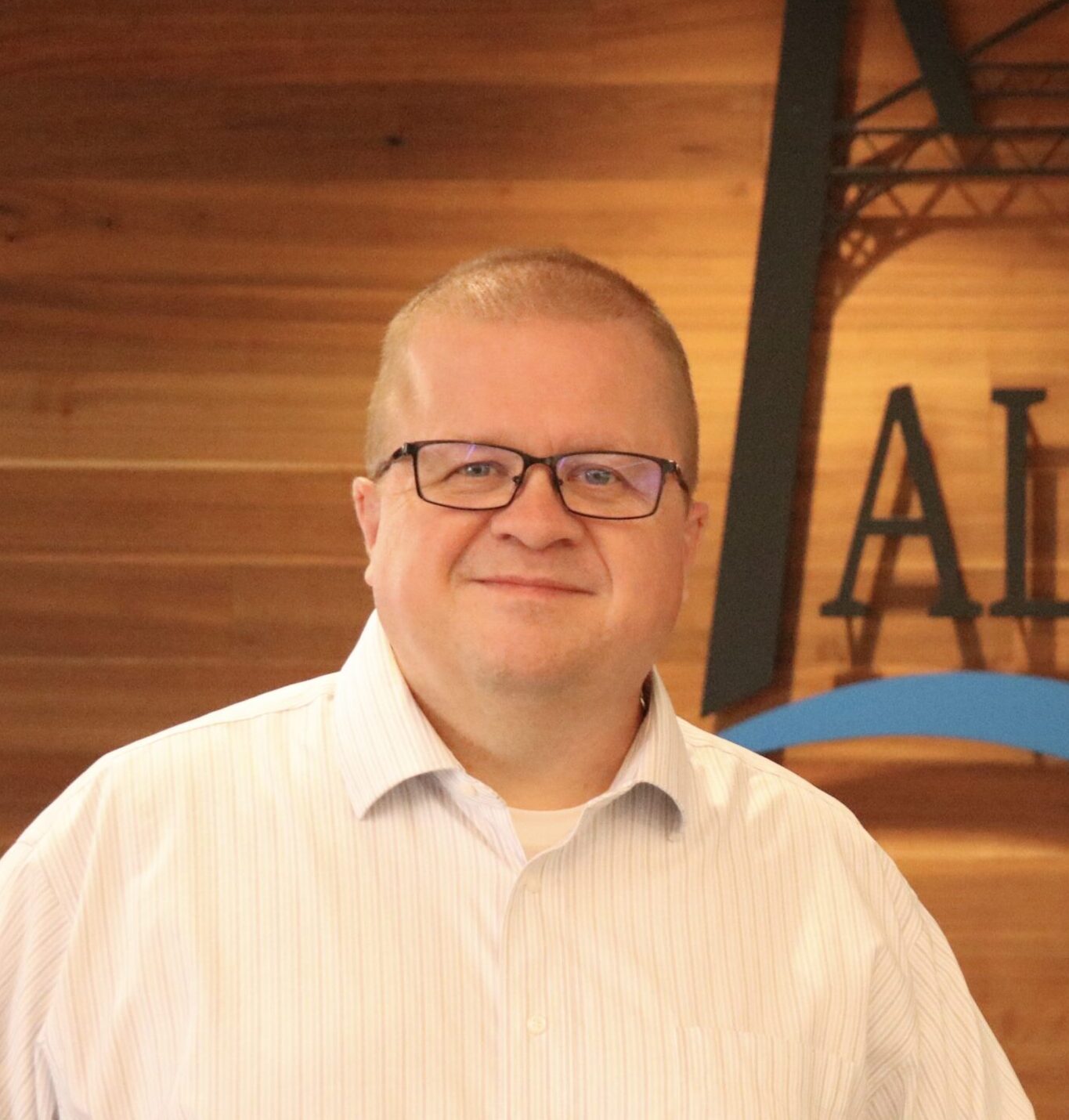
Joel Dye, City Manager for the City of Allegan, is a municipal leader with 25 years of local government experience and eight years as Allegan City Manager. He has overseen major redevelopment initiatives, secured millions in grant funding, modernized city operations, and led award-winning infrastructure and quality-of-life projects. Joel previously served in multiple leadership roles with the City of Holland, including Director of Community and Neighborhood Services, and began his career as an Associate Planner for Antrim County. He holds an MPA and BS from Grand Valley State University and is recognized for his leadership in community development, strategic planning, budgeting, and organizational management.
Tell us about your leadership style and how it’s evolved throughout your career in municipal management.
I naturally lean toward a visionary leadership style. From my early career as a city planner for the City of Holland to my current role as City Manager for the City of Allegan, I have always asked, “What can be?” and then worked to pull together the resources needed to realize that vision. This mindset has helped me move projects forward and get things done.
However, over the years, I have heard from others—and observed myself—that my ability to see the big picture and move quickly to action can sometimes leave people feeling left out as I push the team to implement the vision. Because of this, I have learned to slow down, more intentionally engage the team, revisit the vision together, discuss steps collaboratively, and ensure we are all moving forward collectively toward our agreed-upon goals.
From your perspective as City Manager, what are the biggest challenges facing municipalities like Allegan right now, and how are you addressing them?
Challenges are opportunities for success, and Allegan is full of them. However, the number one challenge we face as a community is housing—new housing, affordable housing, missing-middle housing, senior housing, and more. The need is significant. To make matters more difficult, the City of Allegan is largely built out, leaving very little available land for new development. We are addressing this by revitalizing second floors in our downtown, building new housing on the remaining vacant tracts of land, and encouraging the rehabilitation of existing homes.
The City of Allegan has been proactive in working with the State of Michigan and downtown property owners to convert second floors of commercial buildings into new apartments and lofts. Over the past eight years, we have seen 24 new apartments completed, with 10 more in the pipeline.
We also connected a local property owner with a developer to transform eight acres of vacant land into a 42-unit single-family residential development. To support this project, the City’s Brownfield Redevelopment Authority approved a Brownfield TIF to help reimburse the developer for initial costs and ensure a portion of the homes are available to income-qualified households. Construction is underway, with the first three units already being built.
In addition, the city partnered with a developer to begin planning the development of 14 acres it owns along the Kalamazoo River. Once complete, the upland portion of this site will feature 26 condominiums and 12 townhomes, while the lower land along the river will become a publicly accessible outdoor learning lab owned and maintained by the Allegan Conservation District.
To support the rehabilitation of existing homes, the City of Allegan has partnered with Lakeshore Habitat for Humanity to offer home repair services to local residents. Lakeshore Habitat provides staffing and funding through a state grant, while the city provides meeting space and helps with program outreach.
Beyond housing, another key challenge is securing land for industrial growth. Our existing industrial park is fully built out. However, because Allegan is equidistant from the Grand Rapids, Kalamazoo, and Lakeshore metro areas, we are well positioned within commuting distance of a strong regional workforce. As a result, we have begun discussions with Allegan Township about what it would take to expand our industrial park into their jurisdiction.
I am a firm believer in the mantra: “Business needs talent, talent needs place, and place needs business.” Our success in revitalizing our downtown and riverfront park has created an attractive place. Now, we must continue building the housing people need—and the available land companies require—to ensure long-term economic growth and community vitality.
What key experiences shaped your path to becoming City Manager, and what lessons have stuck with you along the way?
From the beginning, my parents instilled in me a servant’s attitude and the belief that no job is too big or too small for anyone. Those teachings provided the foundation for my path to becoming a City Manager. I was fortunate to begin and grow my public service career with the City of Holland, where I was exposed to a wide variety of opportunities, relationships, and perspectives. It was there that I first witnessed the power of the private and public sectors working together to strengthen a community.
I started as a city planner in 2001, but through the collaborative culture of Holland, I quickly realized that community building and public service are far more complex than reviewing a site plan for a new Walgreens or assisting a planning commission with a master plan. Early on, I saw that I wanted to play a role that connected multiple departments and touched all aspects of the community. With the encouragement of Holland’s leadership, I began taking night and weekend classes to earn my Master of Public Administration and formally pursue the path toward becoming a city manager.
While I learned countless lessons in Holland, several statements and ideas shared by my supervisors have stayed with me throughout my career:
- Cindy Osman, Assistant Director of CNS, told me that my job is to make the decision. This shaped my ability to be decisive.
- Greg Robinson, Assistant City Manager, reminded me that everything we do is economic development. This continues to guide my belief that whether I’m picking up trash on a sidewalk or meeting with business leaders, I’m contributing to the economic vitality of the community.
- Dale Wyngarden, Director of Community Services and Development, took me out in the field to inspect road and development projects and encouraged me to “get a little dirty.” This taught me the value of getting out from behind the desk and seeing the real world firsthand.
- Phil Meyer, Director of Community and Neighborhood Services, advised me not to fear doing something that might fail, but to fear not doing something and having it fail because I didn’t try. This lesson has encouraged me to be creative, push boundaries, and take thoughtful risks when addressing community challenges.
Collectively, these lessons remain fresh in my mind every day as I serve as City Manager for the City of Allegan. They have shaped the work we have accomplished—redeveloping our downtown and riverfront, building a new City Hall, partnering with MDOT to construct a roundabout as the new gateway into Downtown Allegan, and positioning the city for continued success in the years ahead.
How do you continue developing your skills and knowledge in municipal management? What resources or networks have been most valuable to your growth?
As a City Manager in Michigan, I am fortunate to be supported by a strong professional network through the Michigan Municipal Executives (MME). This organization offers multiple statewide workshops as well as regional lunch-and-learn sessions. Participation in MME has allowed me to build valuable connections with other city managers, giving me a network of peers I can call on for advice, collaboration, and support.
In addition to MME, I am a member of the International City/County Management Association (ICMA) and am a Credentialed Manager through their program. ICMA helps me stay informed about emerging issues in the city management profession, and I regularly use their educational webinars, training opportunities, and publications to stay current and sharpen my skills.
For someone considering a career in public service or city management, what advice would you give them about the realities of the work and what it takes to be effective in this role?
Being a city manager is a deeply rewarding career. While there are long days, challenging public meetings, tight deadlines, and moments when you realize that some community goals simply can’t be achieved, these difficulties pale in comparison to the satisfaction that comes from seeing residents enjoy a new park, receiving a thank-you note for fixing a pothole, or attending the ribbon-cutting ceremony for a new restaurant in town.
If you enjoy serving the public, tackling complex problems, and can handle taking a few hits along the way, this is a career that will bring you many more good days than tough ones. There is no single path to success in this role, but if you show up committed to serving the public, listen to others, and remain authentic, city management can be an incredibly fulfilling profession.
What do you enjoy most about doing business in West Michigan?
The diverse landscape of West Michigan is truly one of its greatest strengths. From the city lights of the Grand Rapids and Kalamazoo metro areas to the small towns and communities along Lake Michigan and the forests and farm fields in between, West Michigan offers something for everyone.
That variety is a big part of why I enjoy calling Allegan home. We are a full-service urban center with a historic and architecturally rich downtown filled with restaurants, shops, breweries, a fully restored Art Deco movie theater, a library, and a civic auditorium, all surrounded by tight-knit neighborhoods. Within a quick five-minute drive, you can find yourself on dirt roads in the middle of forests and farmland, taking in the breathtaking West Michigan night sky. And just a bit farther, you can experience the amenities and energy of large urban centers.
It’s that combination—small-town charm, natural beauty, and access to metropolitan experiences—that makes living and working in West Michigan so enjoyable.
Can you share why it is a priority for the City of Allegan to invest in the economic development of the Lakeshore region?
You don’t know what you don’t know. As city managers, we are exposed to a wide range of fields and issues, but we cannot be experts in all of them. That’s why relationships are essential to solving problems. Our partnership with Lakeshore Advantage gives the City of Allegan access to a deep bench of expertise that helps us approach complex economic and community development challenges effectively. Their specialized knowledge allows us to provide the highest level of service to the Allegan community.
Working with Lakeshore Advantage also ensures that Allegan has a seat at the table when key conversations take place. When Lakeshore Advantage engages with private-sector decision-makers about investing and growing in West Michigan, our relationship elevates Allegan’s visibility and influence. On our own, we could not carry that weight with the private market. But by joining with other public and private partners across the region and supporting the work of Lakeshore Advantage, we can collectively strengthen our communities and increase opportunities for long-term success.