
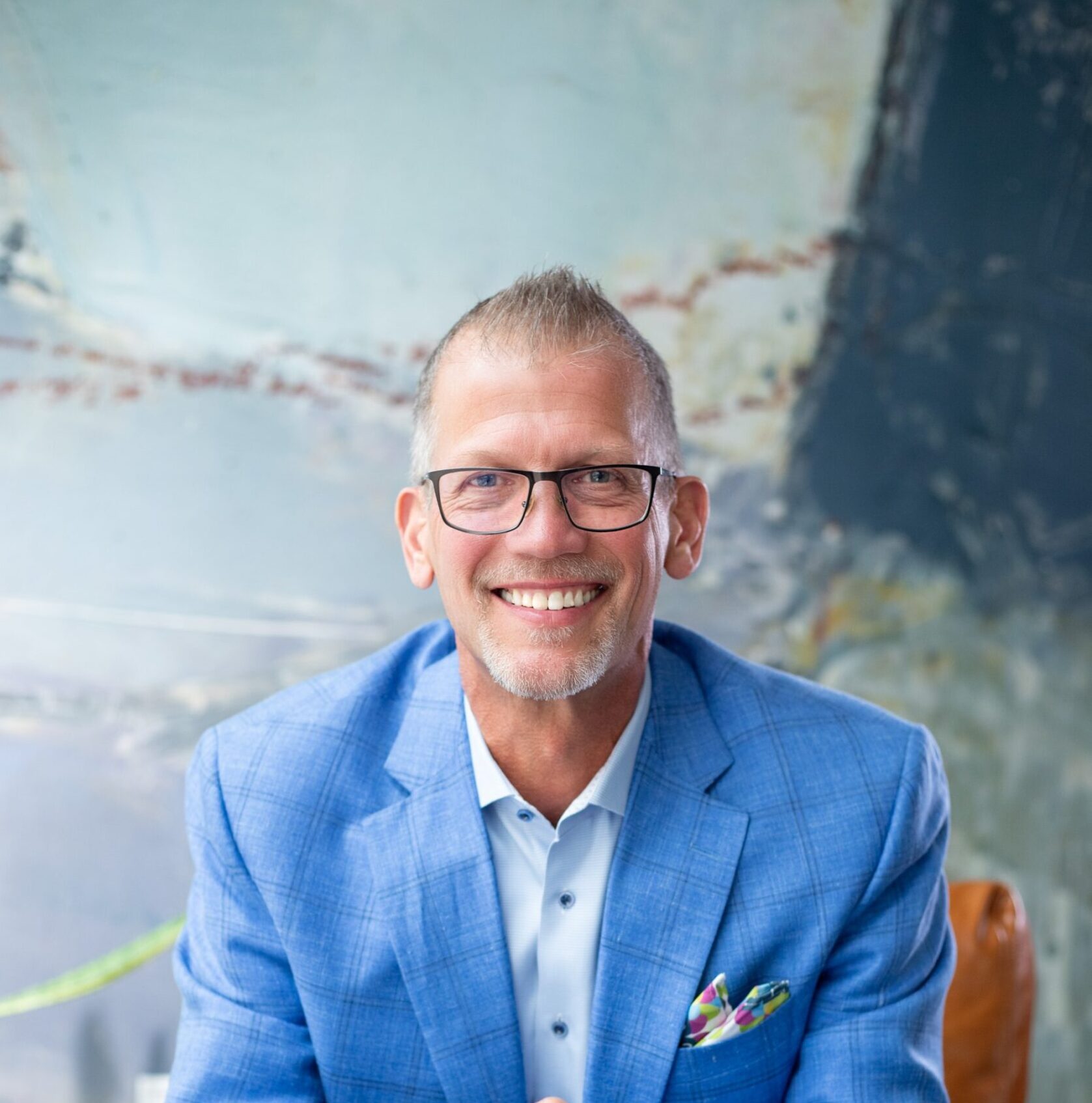
Mike Novakoski, President & CEO of EV Construction
EV Construction commits to a “Built Around People” culture. How do you approach team building and fostering a positive work culture within your organization?
At EV Construction, “Built Around People” is more than a tagline—it’s the foundation of how we operate every day. We believe strong teams are built on trust, respect, and genuine care for one another, and we work hard to create an environment where every voice is heard and people feel valued not only for what they do, but for who they are.
Our approach to team building includes investing in leadership development and mentorship at every level, fostering open communication, and encouraging collaboration. We celebrate wins big and small, prioritize safety, and support work-life balance, because when our people feel cared for and connected, they deliver their very best for our clients and communities.
We also strive to build a culture so strong that the children of our employees want to be part of our company someday. Just as importantly, we extend this culture beyond our own walls and onto our project jobsites. We focus intensely on creating a different, more positive dynamic than our competition—where our trade partners are treated like family and know that we are invested in their success. Many have even said, “this is the best job we’ve ever been on,” which is the ultimate reflection of how we live out our values in every aspect of our work.
Ultimately, our culture thrives because our people lead with heart. That’s what makes EV Construction not just a workplace, but a place where people are proud to belong.
How has the construction industry evolved during your 35+ years in the field, and what trends do you see shaping its future?
When I started in the industry more than three decades ago, construction looked very different. Projects were drawn by hand, schedules were tracked on paper, and communication happened face-to-face or over a landline phone. Since then, technology has completely transformed the way we plan, build, and collaborate. Tools like Building Information Modeling (BIM), drones, and real-time project management software now allow us to visualize, coordinate, and execute with far greater accuracy and efficiency.
But just as important as the technological advances has been the cultural evolution of our industry. Where the focus once rested almost entirely on “bricks and mortar,” today there is a stronger emphasis on safety, transparency, and people. Clients expect energy-efficient, resilient buildings; teams prioritize collaboration and care for one another; and company culture has become just as important as technical expertise.
At EV Construction, we’ve leaned into this shift in unique ways. For example, we eliminated the use of the word “subcontractor” and instead refer to these critical relationships as “trade partners.” That simple but meaningful change shows the respect and value we place on them as one of the most essential elements of a successful project—a wholesale shift from how the industry operated when I began in the 1980s.
Looking ahead, I believe technology integration and workforce development will continue to drive our industry forward. What excites me most is that while the tools and methods will evolve, one thing will remain constant: construction is, and always will be, about people working together to build something lasting for our communities.
How did your Harvard Business School experience change your approach to running EV Construction?
My experience at Harvard Business School was transformative because of its world-renowned case study method. Over the course of 150+ case studies, I was immersed in robust discussions and debates with peers, dissecting complex business challenges across dozens of industries. That experience not only broadened my perspective but also equipped me with practical theories, evaluation methods, and leadership approaches that I’ve carried directly into running EV Construction. The insights gained continue to shape how we analyze opportunities, navigate challenges, and lead with clarity and confidence in a rapidly changing industry.
How do you continue learning and staying current in both the construction space and leadership development?
I’ve always had an insatiable desire to learn, whether it’s from other leaders, business books, educational seminars, or even something as simple as a YouTube video. What excites me most is taking insights from different sources, connecting the dots, and turning them into new ideas that move our company forward. At EV, I like to think of us as an R&D company for refining and testing innovative approaches—whether it’s using AI-assisted strategic business planning or exploring new ways to strengthen team member engagement. Some of these concepts are well ahead of what others in the industry are doing, and that’s energizing. I’ve also embraced the idea of “failing forward,” because every experiment, whether it works perfectly or not, pushes us toward better solutions and stronger leadership.
As someone who has cultivated a culture that’s earned 18 consecutive “Best & Brightest Company to Work For” awards and been recognized as one of Crain’s Most Influential Leaders, what advice would you give to young professionals just starting their careers?
My advice to young professionals is simple: be curious, stay humble, and invest in relationships. Early in your career, it’s natural to want to climb quickly, but patience is one of the most important attributes for up-and-comers—it takes time to build trust, credibility, and influence. Long-term success comes from continuously learning, asking questions, and surrounding yourself with people you can both learn from and support. I also encourage young people to raise their hand and take on new initiatives beyond their job description—those who excel in their current role and step up for new challenges are the ones who stand out as future leaders.
Equally important is finding an organization that aligns with your values. When you work in an environment where you feel respected and part of something bigger than yourself, your career becomes more than a job—it becomes a calling. Don’t be afraid of hard work, but don’t lose sight of balance either—your well-being and character matter just as much as your accomplishments. At the end of the day, success is less about titles and more about the impact you make on people and communities along the way.
What do you enjoy most about doing business in West Michigan?
What I enjoy most about doing business in West Michigan is the sense of community. People here genuinely care about one another, and that shows up in the way businesses, nonprofits, and individuals collaborate to make this region thrive. There’s a strong work ethic, a deep commitment to quality, and a willingness to roll up our sleeves and support each other. For me, it’s incredibly rewarding to lead a company that not only builds projects but also helps strengthen the very communities where our employees live, work, and raise their families. West Michigan is home, and being able to contribute to its growth and vitality is something I take great pride in.
Can you share why it is a priority for EV Construction to invest in economic development?
Investing in economic development in West Michigan is a natural extension of who we are as a company. This region is home for our employees, our families, and many of our clients, so when West Michigan thrives, we all thrive. We see our role as more than just building projects—we’re helping create spaces where businesses can grow, healthcare can advance, and communities can flourish. Beyond our construction work, we’re also passionate about serving behind the scenes, whether it’s through nonprofit board service or supporting dozens of local organizations in achieving their missions. That involvement not only strengthens community impact directly, but also indirectly fuels the long-term economic health of the region. For us, investing in economic development isn’t just good business—it’s a responsibility we’re proud to embrace for the sake of current and future generations.